

What is a product qualified lead?
A product qualified lead is somebody who has already got value out of your product. One published definition is a lead who has experienced meaningful value inside your product, usually through a free trial or a free plan.
A PQL is based on engagement with the product, while an MQL is based on engagement with marketing.
So the two terms read different files. One reads your marketing system, the other reads your product database.
For example, your scoring model can see that somebody opened three emails. It cannot see that they invited four colleagues into a workspace, and that second fact is the one worth calling.
Product qualified lead trigger examples
A PQL trigger is one specific in-product action with a number attached. The examples worth copying are old and public, and what they share matters more than any single threshold.
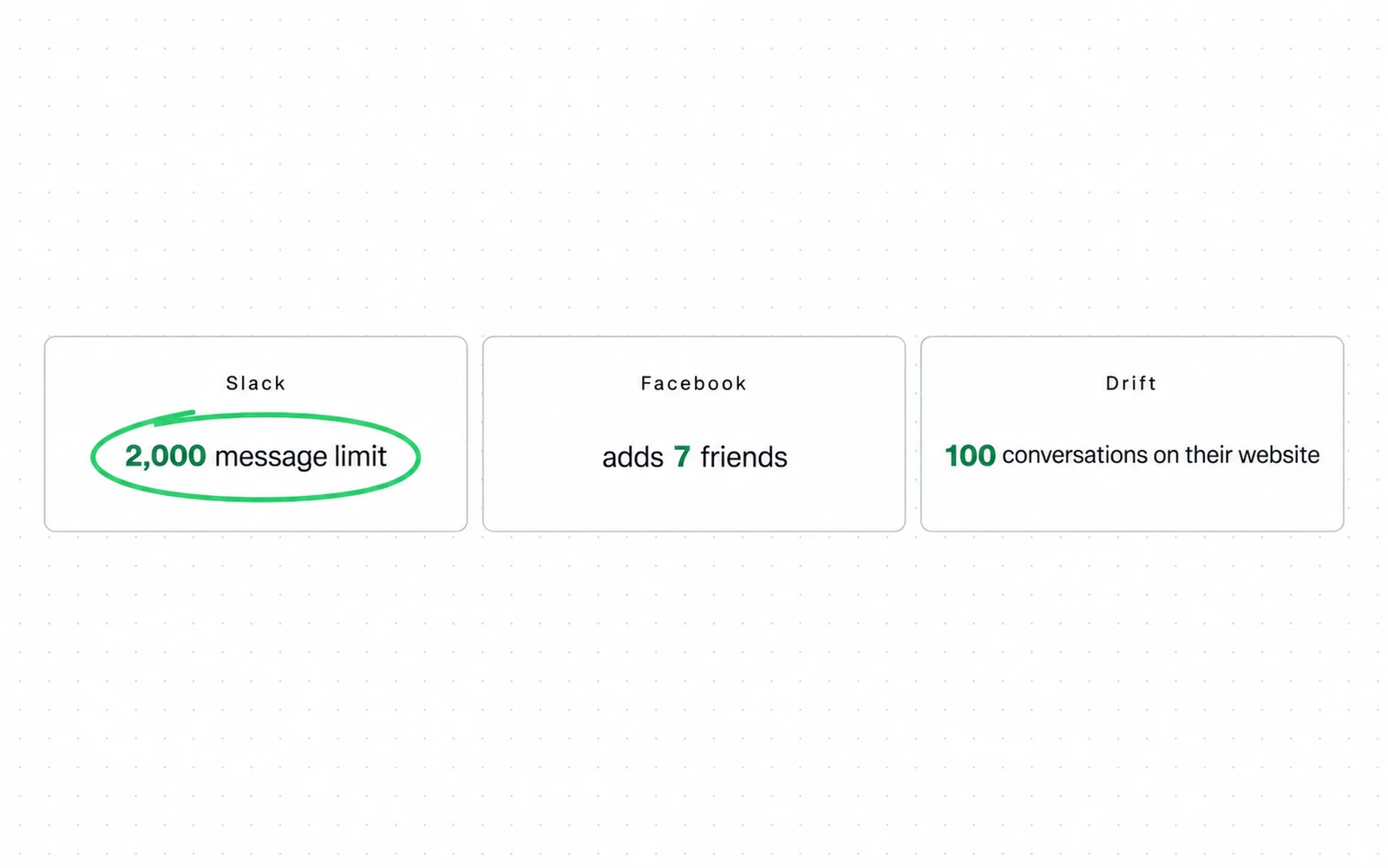
- Each definition names one action and one count. No adjectives, no score, no weighting across five signals.
- The counts are far apart because the products are. Copying somebody else’s number is the mistake this list makes obvious.
- The same page says a PQL definition is "entirely dependent on how your business operates," which is the same handoff the MQL definitions make.
Notice what is missing from all three: nobody counted logins. For example, a login tells you somebody came back and nothing else.
A habit is different. It means they would notice if you took the product away, and that is the thing a rep can build a conversation on.
Scale the qualifying action to the account, so a small team and an enterprise account do not have to clear the same bar. It arrives with no numbers attached, so read it as a direction and not a setting.
What a cleared trigger is worth is the next question, and the answer you will meet most often comes from vendors selling the model.
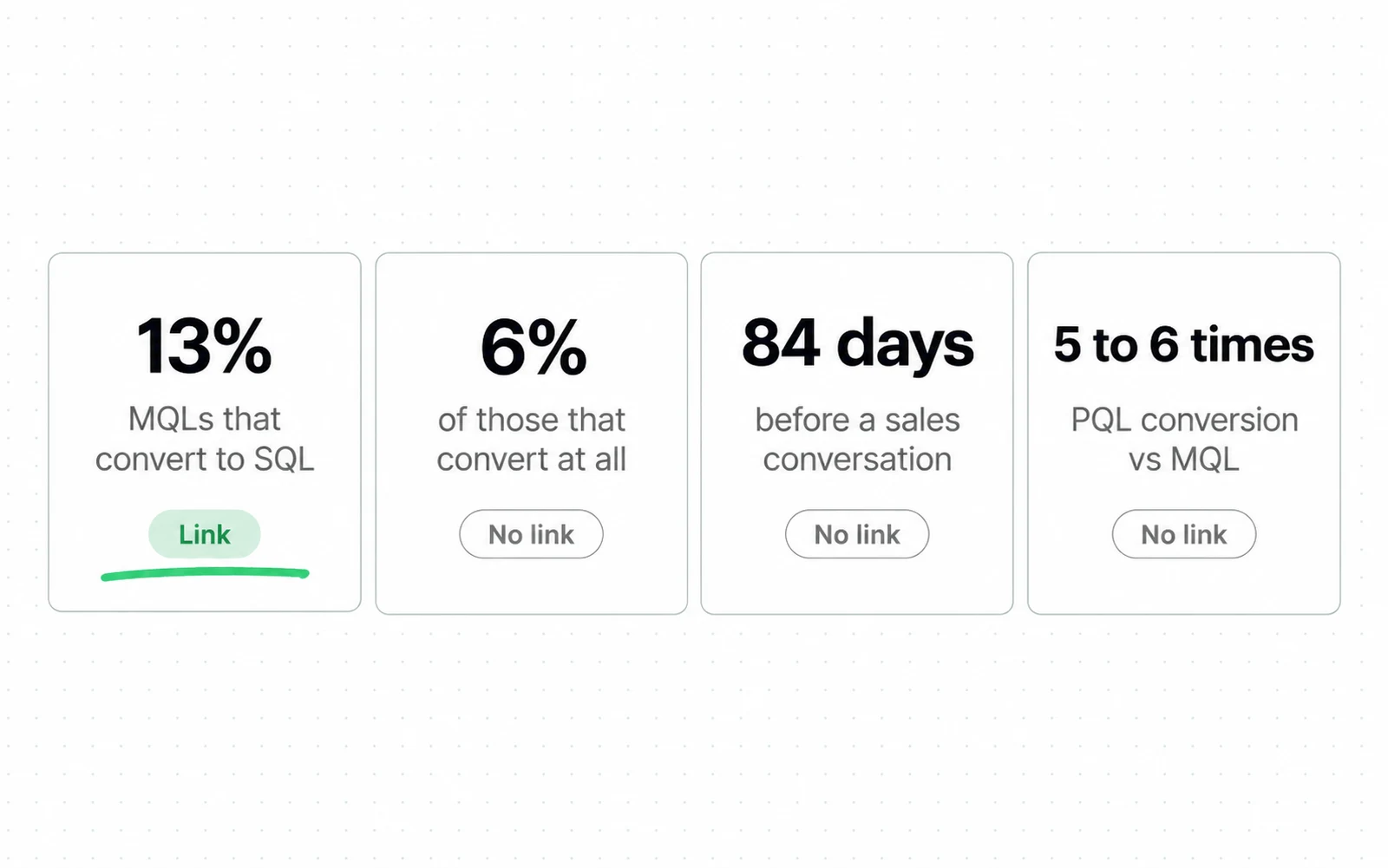
- Four numbers in five lines: 13 percent, 6 percent, 84 days, and five to six times.
- The 13 percent is the only one carrying a link, and it goes to a KPI reference page, not to a study. The other three carry nothing.
- Treat it as a vendor’s case for the model. No PQL conversion rate with a stated sample is published anywhere.
No PQL stage in HubSpot lifecycle defaults
Look at the default lifecycle stages in HubSpot and there is no PQL among them. Subscriber, lead, marketing qualified lead, sales qualified lead, opportunity, customer, evangelist and other. The term you came here for is not on that list.
Eight values ship with the field, and count them for the one you came for
CRM settings · Lifecycle stage · default values
Subscriber
Lead
1Marketing qualified lead
2Sales qualified lead
Opportunity
Customer
Evangelist
Other
- The two marked values are the only qualification stages on the list, and both of them are set by a person deciding something about a contact.
- Nothing here can be set by an action a user took inside your product. That is the gap this page is about, and it is a gap in the field itself.
- Whatever you build becomes a ninth value somebody has to create, and every report and workflow downstream has to be taught it.
That is a build, not a setting. Somebody has to get the product event into your CRM, decide the threshold, and route on it. Teams underestimate the first part and argue about the second.
-
Find the action your best customers all took
Look at accounts that converted last year and find one in-product action every single one of them completed before paying. Start there, not with a metric you already report.
-
Find the number where the curve bends
Plot conversion against how many times accounts did that action. The threshold is where the line stops being flat, not a round number you like.
-
Check it against the accounts who did not buy
If plenty of non-buyers cleared the same bar, the action is popular and not predictive. Try a different action before you tune the number.
-
Get the event into the CRM before you announce it
A trigger your CRM cannot route on changes nothing. This is the step that quietly kills most PQL projects.
Step three is the one that saves a quarter. An action that everybody takes tells you nothing, however strongly it correlates with the people who bought.
PQL vs MQL vs activation
Three terms get used for overlapping things here, and two of them are owned by different teams. Sorting them out is mostly a question of which system holds the evidence.
The marketing side of the contrast is plainer: an MQL is a prospect who meets the criteria your marketing team sets. The criteria are yours, so the term travels badly between companies.
Forrester solves the same problem in the other direction. Jessica Lillian’s account of the SiriusDecisions Demand Waterfall replaces the lead with a demand unit, a buying group organised around one need.
Three terms, three sources of evidence
| Term | Evidence lives in | Who acts on it |
|---|---|---|
| Marketing qualified lead | Marketing automation: pages, forms, emails, firmographics | Marketing, then a rep |
| Product qualified lead | Product analytics: in-product actions and their counts | Sales, usually with a usage summary in hand |
| Activation | Product analytics: the first moment of value | Product, to improve onboarding |
The practical rule is about what already exists. If people can use your product before paying, a PQL is available to you. If they cannot, the term does not apply no matter how good it sounds in a plan.
One publisher places the PQL alongside MQL and SQL for product-led companies instead of replacing them, and that is usually right. Sales still qualifies, but they open the conversation knowing what the person already did.
PQL next to MQL and SQL
A PQL only means something once you know what it is standing next to. The two older stages carry the definitions, the published conversion rates, and the argument about who sets the bar.
Read the comparison of the two older stages first, then decide whether your product can produce a signal worth qualifying on.
Suppose your product can produce the signal: filling the top of that funnel is our SaaS SEO service.
Sources
- ProductLed Beginner’s guide to Product Qualified Leads, by Wes Bush: defines a PQL as a lead who has experienced meaningful value inside the product, and names the Slack, Facebook and Drift triggers
- Paddle A quick guide to product-qualified leads: defines PQLs as users who tested value through a trial or free plan, and states that PQLs read product engagement where MQLs read marketing engagement
- Amplitude MQL vs SQL: places the product qualified lead alongside both stages for product-led companies, where in-product behaviour is the qualifying signal
- HubSpot Use contact and company lifecycle stages: lists the eight default stages, none of which is a product qualified lead
- Klipfolio SQL vs. MQL: defines an MQL as a prospect who meets the criteria the marketing team sets
- Forrester Meet the Newest SiriusDecisions Demand Waterfall, by Jessica Lillian: replaces the lead with the demand unit, defined as a buying group organised around a need
Questions people ask
What is considered a qualified lead?
A lead somebody has checked against criteria and kept. Which criteria depends on who is doing the checking: marketing uses fit and behaviour, sales uses a conversation, and a product-led team uses what the person did inside the product.
None of those bars is set by an outside standard, so a qualified lead means whatever your teams have written down.
What is a MQL and SQL?
An MQL is a lead marketing judged ready for sales, usually from a score. An SQL is a lead a rep examined and kept after contact.
A PQL sits alongside both and reads a different system. It reads product usage, not marketing engagement.
What are the three types of leads?
Marketing qualified, sales qualified and product qualified are the three names in common use. The first two are consecutive stages in a funnel.
The third is a different kind of object. A PQL is a signal source, not a position in a queue, and companies that adopt it usually keep the other two stages as well.
How much do qualified leads cost?
Ask instead about cost per qualified lead. That divides your spend by the leads that cleared your bar, not by everybody who filled in a form.
That number moves whenever you move the bar, so write the definition next to it. A PQL is not bought through media in the way a form fill is. Its cost sits mostly in getting the product event into your CRM. That is work you pay for once.