
Shopify AEOAssistants read the store, not the pitch.
What an answer engine can read on your storefront: the product data in the page, not in the app, the crawler rules in your theme, and which pages are worth quoting.
- Product data in the rendered page
- Crawler rules in robots.txt.liquid
- Pages built to be quoted
- Where the store is named today

Addition is a marketing agency for ecommerce and B2B brands
We turn your searches into paying customers.








Assistants read the store, not the pitch.




Shopify AEO problems we solve.
Do you say even one of these?
-
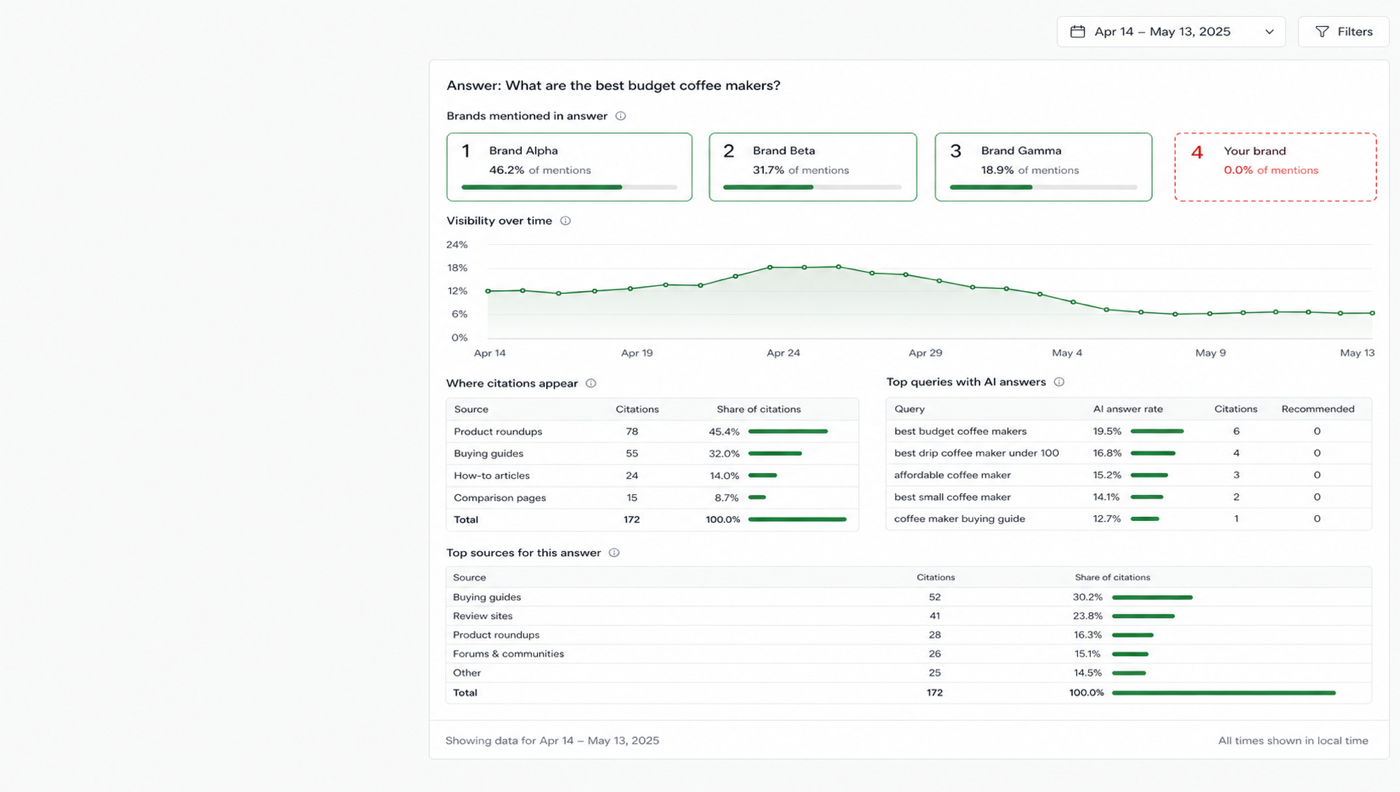
Assistants recommend our competitors and never name us.
-
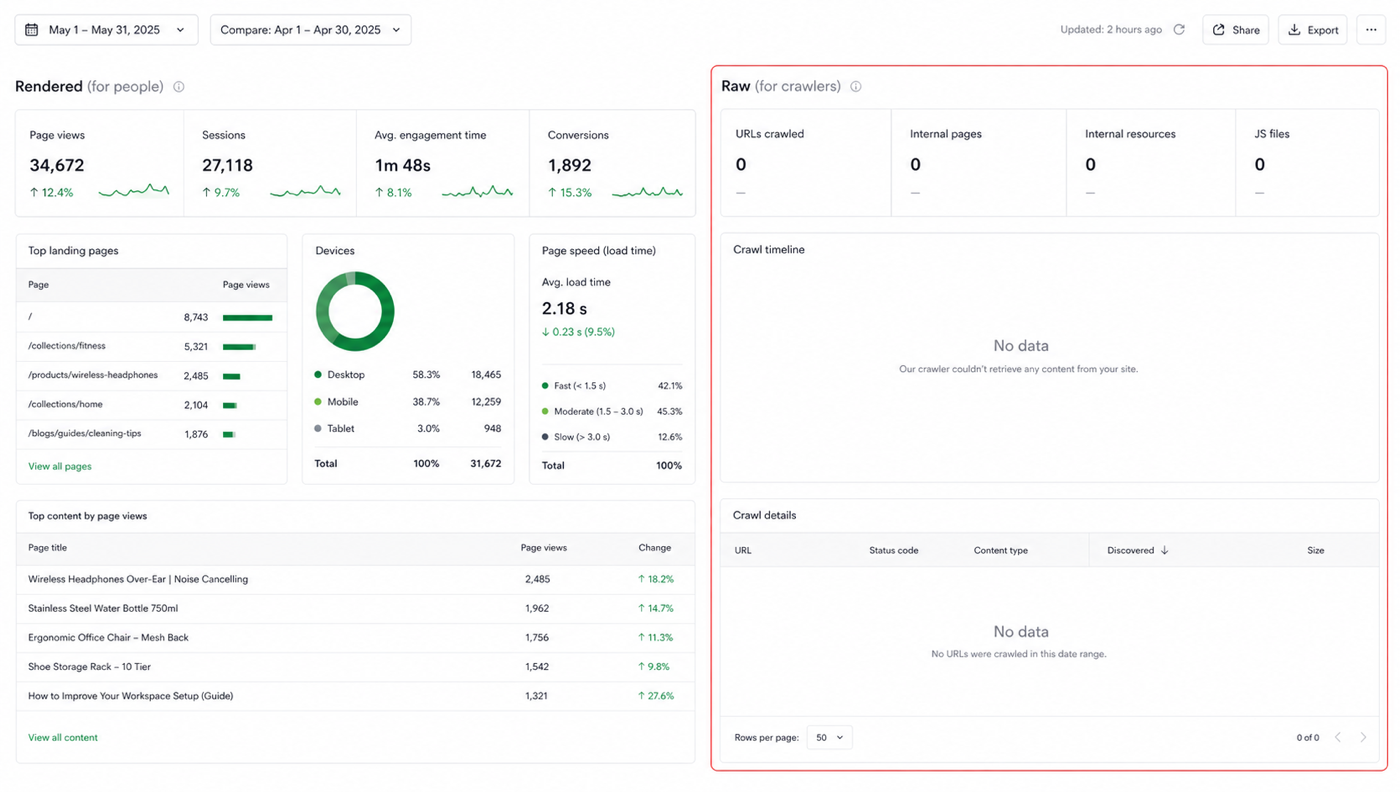
Our product details live in an app, so the page comes back thin.
-
We do not know which assistants can even read the store.

Three promises. Hold us to them.
- We check what assistants are allowed to fetch, and what they get back when they do.
- We move the details that sell the product out of the app and into the page.
- We report where the store is named today, so the next reading has something to move against.



A roadmap no prompt can write.
Ideation, strategy and the roadmap all happen in these six steps. This is the part no AI can replicate, and it is where the value of our work comes from.
-
Step 01
Onboarding
We review the main channels and pages in the Shopify store buying journey, then agree on the primary conversion metric.
-
Step 02
The audit
A shopper who already trusts the checkout still has to find the store, so we find where the platform hides the pages that should be doing the finding.
-
Step 03
Brand DNA
A theme makes every store sound the same, so the voice has to carry what the theme cannot.
-
Step 04
Market & Competitors
We read the stores winning your searches, the ones bidding against you, and the ones an AI assistant names when someone asks where to buy.
-
Step 05
Roadmap & Strategy
Everything we found becomes one task list, and we agree together which jobs come first, so the work that earns from search soonest is the work that starts.
-
Step 06
Execution
We move in weekly cycles and take the list in the order we agreed, so every week of work points at the one number.





Where do you need support?
Questions people ask about Shopify AEO
Can ChatGPT integrate with Shopify?
Yes. Shopify syndicates catalogue data to ChatGPT so products can be discovered there with no merchant work. That is organic discovery, not advertising; ads are a separate build with their own feed.
Will our products show up in ChatGPT?
Catalogue syndication gets the data there. How ChatGPT then chooses what to name is not published, so what we work on is the part that can be read: what the storefront exposes in the page and which pages are worth quoting.
What does an answer engine read on a Shopify store?
The product data in the page, not in the app; the crawler rules in your theme; and the pages worth quoting. If the specification lives in an app that renders after the page loads, an engine that does not run scripts will not see it, and we do not assume any engine does.
How do you know if it worked?
The same buying prompts, asked again on a schedule, with who was named recorded each time. The baseline is taken before any change, and because answers vary between runs, movement is read across several checks rather than one.

See where Shopify store buyers lose you.
Then take that step back.
A shopper who already trusts the checkout still has to find the store first. We review the journey from early research to the order confirmation and identify the highest-impact conversion issue.