
CONTENT SKILL
Conversion copywriting
Conversion copy for any marketing page: five principles, six writing-style rules, an above-the-fold structure with headline formulas, CTA guidelines, and page-type guidance, delivered with annotations and alternatives.
No key, no account needed Claude Code
 Cursor
 CodexWindsurfany agent that reads SKILL.md
npx skills add addition-labs/skills --skill copywritingRun this in a terminal inside your project folder. Claude Code, Cursor and Codex then read the skill from where it lands.
- Step 01Open a terminal in your project folder
- Step 02Paste the command and press Enter
- Step 03Pick the agents to install to
- Step 04Ask the agent for the job; it reads the skill
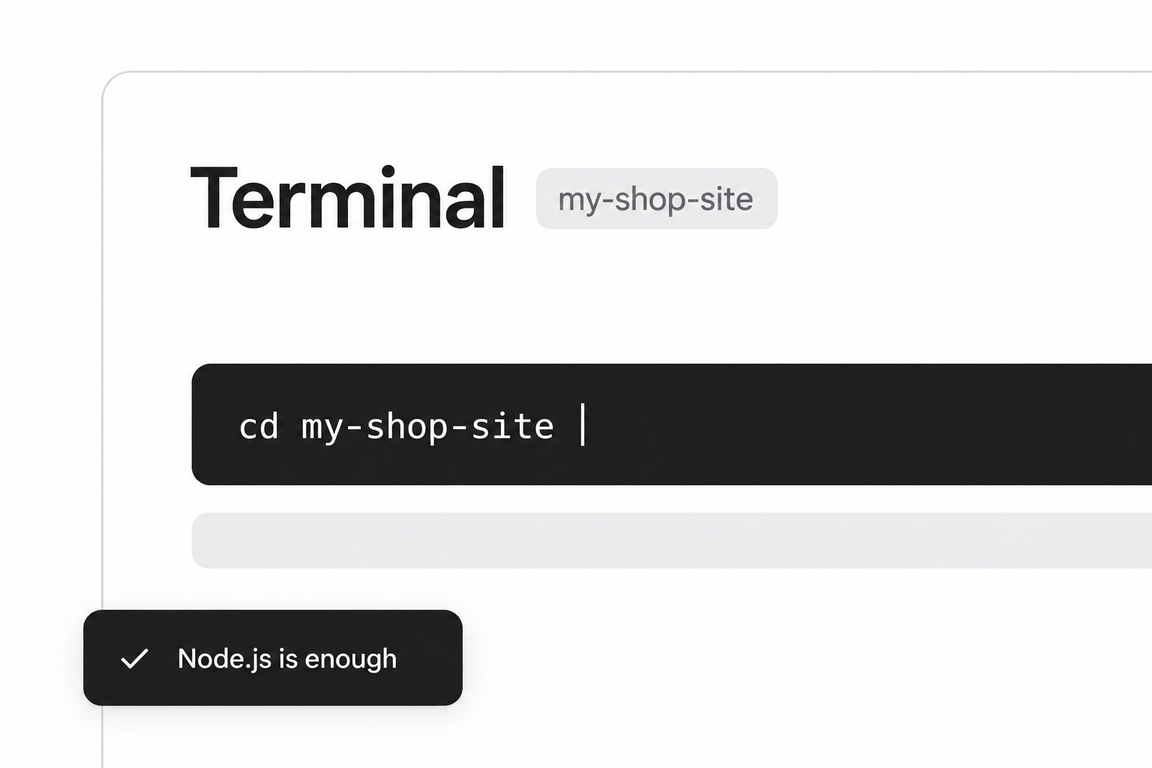
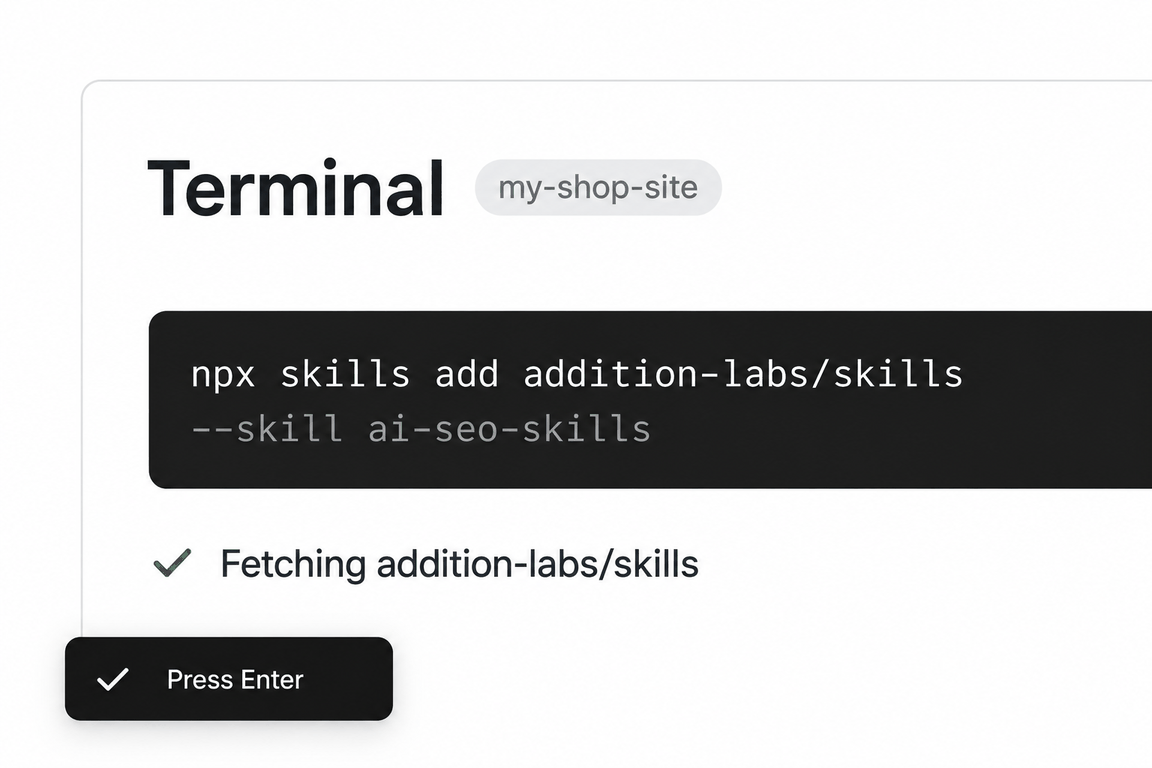
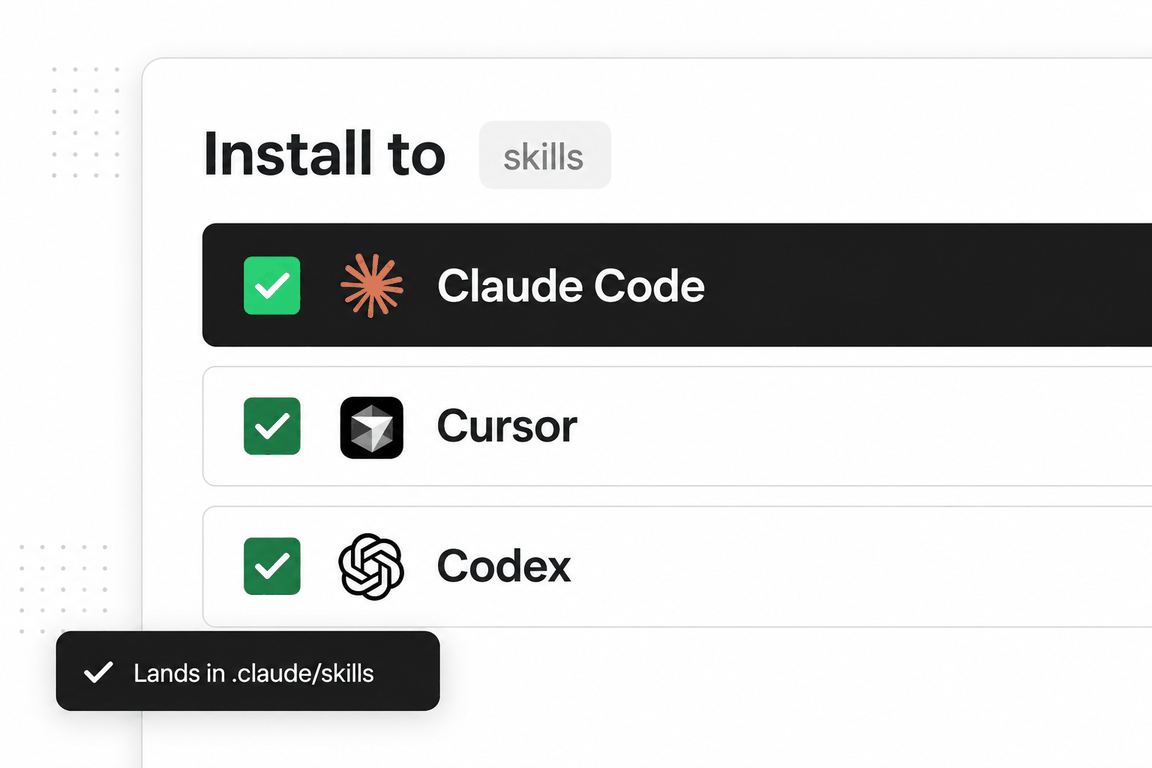
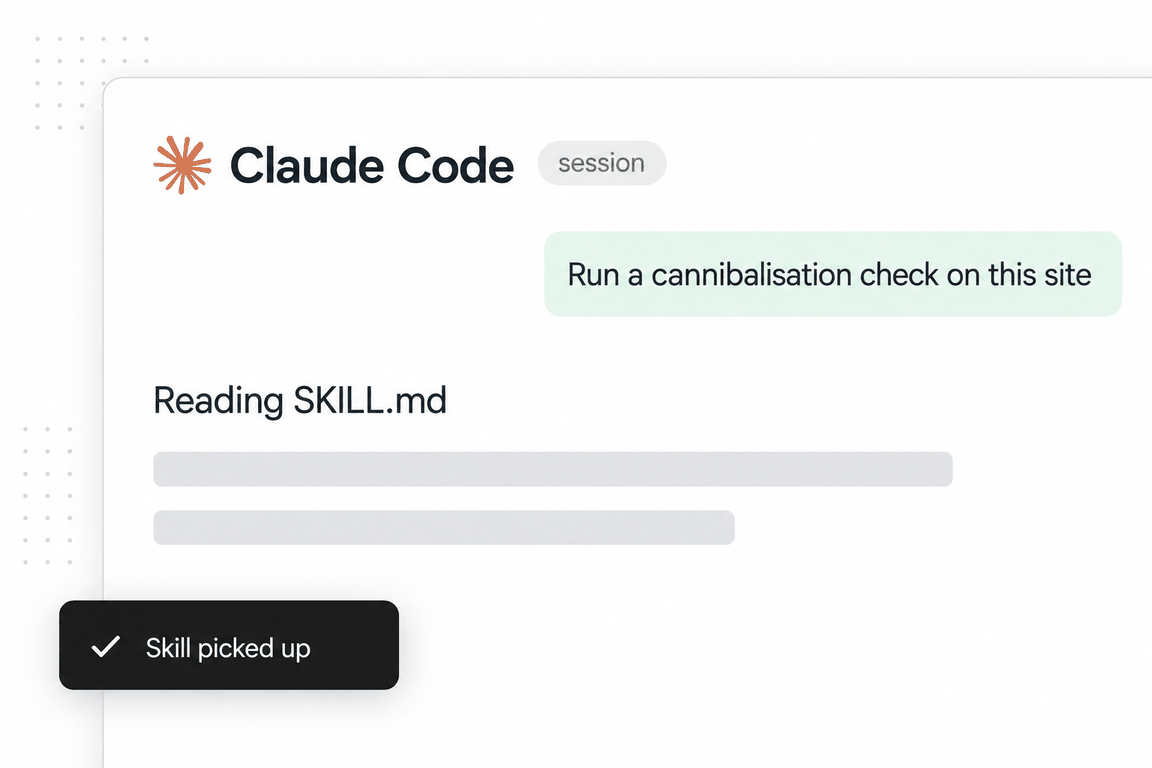
copywritingaddition-labs/skillsMIT licencev2.0.2updated 2026-09-05
A disciplined brief-taker. Before writing it wants the page purpose and its one action, the audience and their objections in their own words, the offer and its proof, and where the traffic comes from. If `.agents/product-marketing.md` exists it reads that first instead of asking.
Its rules are the ones good editors already enforce: clarity over cleverness, benefits over features, specificity over vagueness, customer language over company language, one idea per section; simple, specific, active, confident, shown not told, honest.
The output is page copy by section with a note on why each choice was made, two or three alternatives for headlines and CTAs with rationale, and meta content if asked. The frameworks and transition phrases sit in two reference files.
When to use it
The phrases that trigger it
Say any of these and an agent that has the skill installed will usually load it; you can also call it by name. The phrases are the skill’s own, from its description.
- write copy for
- improve this copy
- rewrite this page
- headline help
- CTA copy
- value proposition
- hero section copy
- above the fold
- this copy is weak
What’s inside
The playbook, section by section
Clarity, with a number attached
The skill cites clearer positioning being associated with +81% conversions, a 38% shorter sales cycle and 28% lower CAC. It does not name the study, so the figures stand as the author’s claim until the source is found.
Headline formulas
"{Outcome} without {pain}", "The {category} for {audience}", "Never {unpleasant event} again", or a question that names the main pain.
The hero as a transformation
Discomfort, vision, path; then every headline through the "Now you can" test.
Core sections
Social proof, problem, solution and benefits, how it works, objection handling, final CTA with risk reversal.
CTA formula
Action verb plus what they get plus a qualifier: "See Pricing for My Team", not "Submit".
Voice and tone settings
Formality level and brand personality decided before writing; headlines bolder, body clearer, CTAs action-oriented.
Reference files the agent loads on demand
2 files in the skill folder, read only when an instruction calls for one.
copy-frameworks.md- Headline formulas, landing-page section types, page structure templates and section writing tips.
natural-transitions.md- Transitional phrases that carry a reader through a piece, adapted from university writing guides.
See it in action
One real run, in full
The request on the left went to the skill as installed. On the right is everything it returned, unedited; scroll inside the box to read it all.
Fetch https://addition-labs.com/services/aeo and rewrite its hero: headline, subheadline and primary CTA, for an ecommerce founder who has heard the term AEO and is not sure it is real. Keep every claim to what the page already says. Give 3 alternatives with rationale.
Hero rewrite: addition-labs.com/services/aeo
Page fetched: https://addition-labs.com/services/aeo (HTTP 200, 2026-09-11) Reader: an ecommerce founder who has heard "AEO" and is not sure it is a real thing. One action: submit the email in the hero form (the page's free search and AI check).
Context used
Taken from the request and the live page, so no questions were needed for these:
- Page purpose: service page for AEO / AI Visibility. Primary action is the hero email form ("Free search and AI check" / "Send me AI & SEO Audit").
- Audience and objection: ecommerce founder, skeptical. The page already names the three sentences it hears before this work starts: "The AI assistants describe us correctly and still recommend someone else." "We rank first on Google and we are absent from the same question in ChatGPT." "Nobody can tell us what AI says about our brand."
- Offer, as the page states it: AI systems already read your site, that is not the same as naming you. Addition finds the prompts that decide a purchase in your category, measures what each AI assistant says today and who it names instead of you, gives the answer something it can verify, then measures again. SEO and AEO are run together. Assistants shown: ChatGPT, Perplexity, Gemini, Claude. Case studies: "from official Apple retail to global travel platforms."
- Proof points: the page carries no numbers (no client counts, no lift figures, no citation rates). None are used below.
Still open, and not assumed in the copy: where hero traffic comes from (ads, organic, LinkedIn), and whether a named case-study result can be quoted. Both would sharpen the subheadline. See "Open questions" at the end.
Current hero (as-is, for reference)
- Eyebrow chip:
AI Visibility | which brand should i buy from(rotating prompts) - H1:
AEO / AI Visibility/Being cited is not being recommended. - Lead:
AI systems already read your site. That is not the same as naming you. We get your brand named as the answer. - Form label:
Free search and AI check· Button:Send me AI & SEO Audit· Note:Our team will get in touch with you.
What holds a skeptic back here: the headline assumes the reader already accepts that being cited by AI matters. A founder who is not sure AEO is real does not yet have "cited" in their vocabulary, so the distinction cited-vs-recommended lands as insider language. The rewrite below moves the felt discomfort in front of the distinction.
Recommended hero
Eyebrow (keep as is): AI Visibility | which brand should i buy from
Headline: > Someone just asked ChatGPT which brand to buy from. Was it yours?
Subheadline: > AI assistants already read your site. That is not the same as naming you. We run the prompts that decide a purchase in your category, record who gets named instead of you, and get your brand named as the answer.
Primary CTA (button): > Show me what AI says about my brand
Form label (keep): Free search and AI check Note under the form (keep): Our team will get in touch with you.
Annotations
- Headline: a question the skeptic can test in 30 seconds. The page's own rotating chip shows the prompt "which brand should i buy from." Putting that prompt in the headline makes AEO concrete: it is not a category name, it is a question a customer types. A founder who doubts AEO is real can open ChatGPT and ask it. The copy does not need to argue that AEO exists, it only needs to point at the question. (Principle: specificity over vagueness; rhetorical question that makes the reader check their own situation.)
- Human Action Model, three beats present. Discomfort: the question was asked and the answer might not be you. Vision: "get your brand named as the answer" (the page's own promise, unchanged). Path: the free check, via the CTA.
- Subheadline keeps every claim inside the page. "AI assistants already read your site. That is not the same as naming you." is the existing lead. "Run the prompts that decide a purchase in your category, record who gets named instead of you" is the page's closing paragraph, moved up because it is the most verifiable description of the work. No numbers were added because the page has none.
- Perception Gap, applied. For a skeptic, a bold AEO promise reads as hype (red flag). A promise phrased as measurement ("record who gets named instead of you") reads as something that can be checked (safe). Same offer, framed for the risk-averse reader.
- CTA: action verb plus what they get. "Send me AI & SEO Audit" describes a document. "Show me what AI says about my brand" describes the thing the founder cannot get today; the page lists "Nobody can tell us what AI says about our brand" as a sentence it hears before work starts. The CTA answers that sentence directly. First person ("my brand") matches the existing button's "Send me."
- "Now you can" test on the subheadline: "Now you can see who AI names instead of you, and get your brand named as the answer." Compelling and true to the page.
- House style observed: short declarative sentences, no em dashes anywhere on the page. The rewrite follows that.
Alternatives
Option A: Rank-first-on-Google angle (problem-focused, mirrors the founder's own words)
Headline: > You rank first on Google. Now ask ChatGPT the same question.
Subheadline: > Every AI assistant answers the same question its own way, and most brands cannot say what it answers about them. We measure what each assistant says today, record who it names instead of you, and give the answer something it can verify.
CTA: > Show me who AI names instead of me
Rationale: Built from the page's second pain sentence, "We rank first on Google and we are absent from the same question in ChatGPT." It flatters what the founder already did (ranked) and turns the skepticism into a dare they can run themselves. Best if hero traffic is founders who already invest in SEO. Weaker for a founder who does not rank first, since the opening line then does not describe them. The "most brands cannot say" line is a softening of the page's "Nobody can tell us what AI says about our brand"; if that softening is felt to add a claim, use the page's wording verbatim.
Option B: Cited vs recommended, made plain (keeps the page's current thesis, translates it)
Headline: > AI already reads your store. It does not recommend it yet.
Subheadline: > Being cited is not being recommended. We find the prompts that decide a purchase in your category, measure what each AI assistant says today, and change what it can verify. Then we ask every engine again.
CTA: > Send me the free AI & SEO check
Rationale: The current H1 distinction is right, it is just in the wrong order for a newcomer. This version puts the plain-English fact first (AI reads your store, it does not name it) and lets the sharper line "Being cited is not being recommended" appear as the explanation. "Change what it can verify. Then we ask every engine again." is lifted from steps 03 and 06 of the page's six-step process and reads as method rather than promise, which is what a skeptic needs. The CTA stays closest to the existing button, so this is the lowest-risk swap if the form label and button are hard to change.
Option C: Purchase-deciding prompts (outcome-focused, "get outcome by how")
Headline: > Some prompts decide a purchase. Be the brand in the answer.
Subheadline: > We run those prompts in your category across ChatGPT, Perplexity, Gemini and Claude, record who gets named instead of you, and show you the content and proof changes that would put you in the answer. SEO and AEO, run together.
CTA: > Show me the prompts that decide a purchase in my category
Rationale: Leads with the one idea on the page that makes AEO feel like commerce rather than tech: "the prompts that decide a purchase." Naming the four assistants (all shown as logos in the page's hero and pair-note) makes the scope concrete for a reader who only knows "ChatGPT." The CTA is the longest of the set and would need to be checked against the button width; it earns the length by promising something specific and category-bound. Best if the founder's real doubt is "does anyone actually buy through AI," since the headline answers that with the page's own framing and no invented statistic.
Ranking, in one line each
- Recommended for a cold, skeptical founder: the question is testable and needs no prior belief in AEO.
- Option B if the team wants to keep the current thesis and change the least.
- Option A if traffic is SEO-literate founders who already rank.
- Option C if the doubt is about purchase intent rather than about AEO existing.
Meta content
Current title and description already match the page's thesis ("Being cited is not being recommended. We find the prompts that decide a purchase and get your brand named as the answer.") and need no change for this hero rewrite. If the recommended headline ships, one optional description variant that stays inside the page's claims:
> AI assistants already read your site. That is not the same as naming you. We find the prompts that decide a purchase in your category and get your brand named as the answer.
Open questions (would sharpen the subheadline, not required to ship)
- Where does hero traffic come from: ads, organic, LinkedIn? If ads, the headline should match the ad line.
- Is there one case-study result (brand, question, before/after) that can be quoted in the hero? The page names "official Apple retail" and "global travel platforms" as search clients but gives no AEO result, so none was used.
Next step
Run the chosen hero through the copy-editing skill for a line-by-line pass before it goes live.
What this run could not do
It had no traffic-source context and no proof points (numbers, testimonials, case-study results). The page carries no numbers, so none were used; the two gaps are listed as open questions. The rest of its questions were answered by the request and the live page, so it proceeded to copy.
Method behind it
Where we would differ, and why
Our SaaS landing page guide shows what these rules produce on a real page and where they conflict with what a founder wants to say. The skill writes the draft; the guide is the reference for what a converting page says in each section and why.
The "use rhetorical questions" and "pepper in humour" advice reads well for SaaS and badly on a store’s product page, where the reader wants the fact. We would keep the clarity rules and drop the flourishes for ecommerce.
It suggests "Start Free Trial" as the strong CTA pattern. A service business has no trial; the formula still holds (verb plus what they get), the example does not.
SKILL.md
The file the agent reads
Written by Corey Haines and published under the MIT licence. Read the full file (1,257 words) on GitHub, at the commit we reviewed: coreyhaines31/marketingskills/skills/copywriting/SKILL.md. The reference files are in the same folder.
Questions
Questions people ask before installing
Will it write in my brand voice?
If you give it one. It asks for formality and personality before writing, and reads your product-marketing file if you keep one. Without either it defaults to clear and professional.
Does it edit existing copy too?
It rewrites. For a line-by-line edit that preserves your draft, the copy-editing skill runs seven focused passes.
Can it write ad copy?
Page copy is its job; ad headlines with platform limits belong to ad-creative, which it hands off to.