

Free GEO tool to start with
Say you sell running shoes and you want to know whether ChatGPT names you when somebody asks for cushioned trainers. You don’t need a subscription to find that out. You need one to find out again next week, and again the week after, across more than one engine.
That distinction is the whole purchase, and it is a fair one. Measuring once is free. Measuring repeatedly, on a schedule, across engines you don’t have accounts for, is real work, and every vendor here prices it.

Before you buy anything, check what you already pay for. Ahrefs includes custom prompt tracking from its Lite plan upward, so a store already on one of those subscriptions may have the measurement half without a second invoice.
So run the free one first. Mangools AI Search Grader generates prompts from what you tell it about your brand, runs them across AI models, and reports the share of prompts where your brand shows up in the top 20. It publishes that definition on the page. Most paid tools don’t.
The job you have, and what is sold for it
| What you want to know | What to use | What it costs |
|---|---|---|
| Does an AI answer name me at all, today | Mangools AI Search Grader | Free, three models without paying |
| The same, if you already pay for an SEO suite | Ahrefs Brand Radar | Custom prompts included from the Lite plan up |
| Is that changing, week to week, on ChatGPT | Profound Starter | $99 a month, ChatGPT only, 50 prompts |
| The same, across four engines | Semrush | $99 a month, 25 prompts |
| Where a whole category stands, not just you | Ahrefs AI Visibility Index | From $199 a month, 464M prompts indexed |
| What the agents crawling my site are doing | Scrunch AI | $250 a month, Core plan |
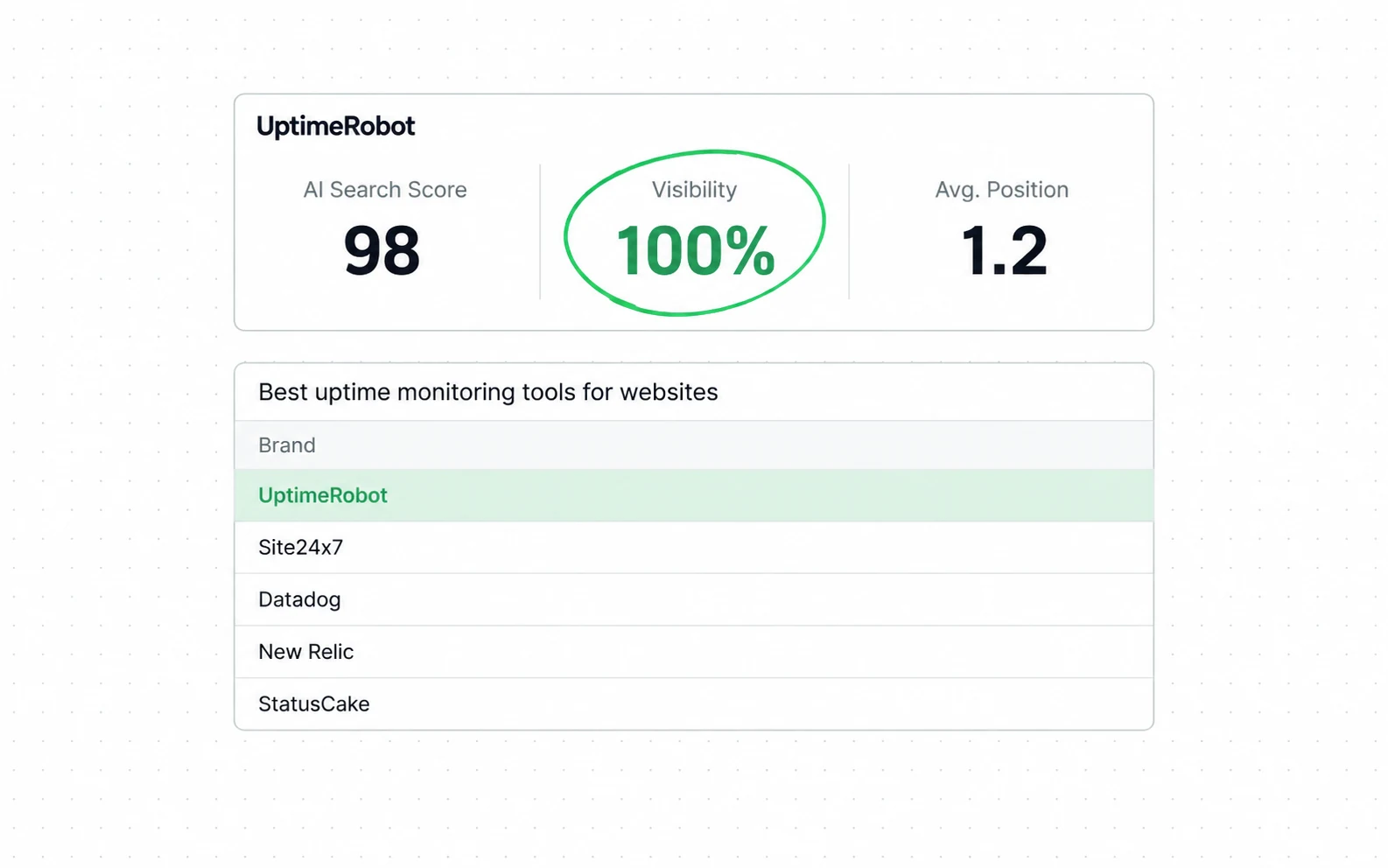
- The score, and the two numbers under it. Visibility is the share of prompts where the brand appeared. Average position is where in the answer it landed.
- The prompt table is the part worth having. It shows the question, then every brand the answer named, in order.
- Your competitors arrive with it. You did not ask for their scores and you get them anyway, which is the argument for running this before you buy anything.
Research testing the generative engine optimization method
GEO is not just a label on a product. It is a named method, published in 2024, and somebody has since tried that method and counted what happened. What they counted decides what a tool carrying that name is worth to you.
Aggarwal, Murahari, Rajpurohit, Kalyan, Narasimhan and Deshpande published the method at KDD 2024, and what they measured was your share of a generated answer.
The method is nine specific edits you make to a page. Two of them are easy to picture. Say you sell running shoes: one edit is adding a quotation from a named source to your page, and another is stuffing running shoe keywords into it. The researchers made each edit, then measured how much of an AI answer came from the edited page.
Adding a quotation worked best. It took the share of the answer from 19.3 to 27.2. Keyword stuffing was the only edit that made things worse, at 17.7. The ordering is worth more than either number, because it says the edits that help are the ones that put something checkable on the page.
Then a second team ran the same edits in more settings, to see whether the result held. It mostly did not. Of the fifty-four combinations they tried, three came out better than doing nothing at all.
Three wins in fifty-four attempts. That is the number to carry into a sales call with anyone selling you GEO. Our guide to generative engine optimization sets out what that benchmark tested and what it did not.

Now the sentence that matters for a budget. A benchmark failing doesn’t prove a product fails. Vendors don’t publish which methods they recommend, so the two can’t be lined up. What the benchmark does is move the burden: if the method behind the name mostly did not hold, a vendor claiming to move your number owes you a test.
Google adds a second constraint from the other direction, and it puts it in a highlighted box on its own documentation.
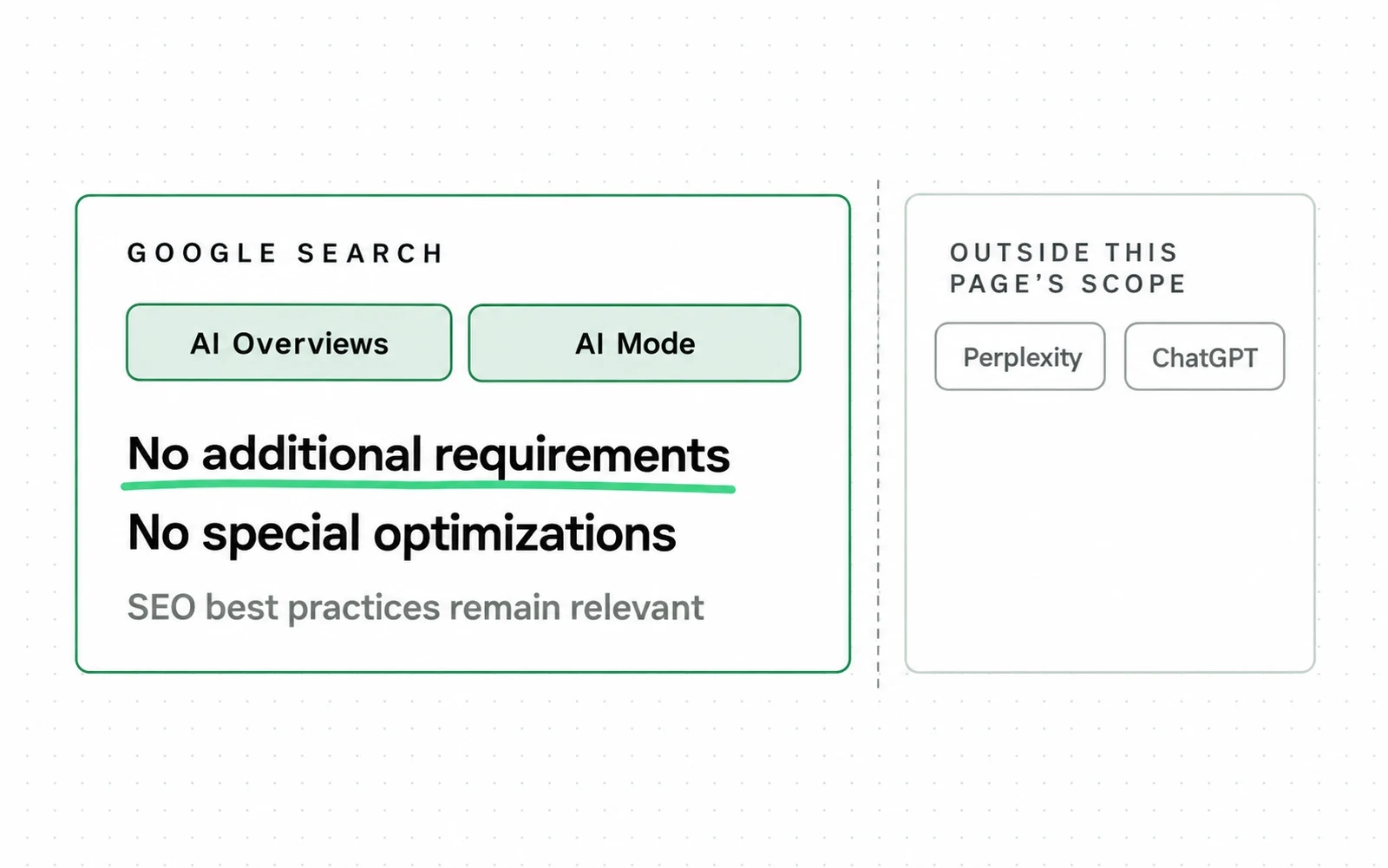
- The sentence is Google’s and it is in bold on Google’s own page: no additional requirements, no special optimizations.
- The scope is the page it sits on. Google is talking about AI Overviews and AI Mode, not about Perplexity or ChatGPT.
- It rules out a separate technical requirement. It does not rule out writing a page well.
What does $99 buy?
At ninety-nine dollars the same money buys very different things, and the trade is not the one you would expect: prompt allowance and engine coverage move against each other. Only two published pricing pages carry enough detail for you to line them up.
Coverage without a price runs both ways, and neither of these will quote you one. SE Ranking names ChatGPT, Gemini, Perplexity and AI Overviews as tracked surfaces and prints no price. Peec AI names three engines and tells you nothing about cost.
What each vendor publishes about its own entry plan
| Profound Starter | Semrush AI Visibility | |
|---|---|---|
| Price | $99/month, billed yearly | $99/month per domain, billed annually |
| Engines | ChatGPT only | ChatGPT, Google AI, Gemini, Perplexity |
| Prompts | 50 tracked | 25 custom |
| Refresh rate | Daily | Daily, weekly and monthly |
| Next tier up | $399, three engines, 100 prompts | Not published as a tier |

That’s a real trade, so make it deliberately. Say you sell running shoes: fifty prompts on ChatGPT tells you a lot about ChatGPT and nothing about Perplexity, while twenty-five prompts across four engines tells you a little about each.
Two things narrow the choice, and one of them is free. Ask your own customers which assistant they use, because that is the question the trade is really about. Then read your access logs for the AI crawlers. They tell you which engines fetch your pages. That is a different fact from what your buyers use, and it still helps before you buy coverage.
Poor fits for each generative engine optimization tool
Each of these is a poor fit for somebody, and the fit is decided by what you can already answer without them. It comes from what each vendor publishes about itself, and nobody has run them side by side and published the result.
Mangools AI Search Grader
Free, and it says what it counts: the share of prompts where your brand lands in the top 20, turned into a score out of 100. Three models are open without paying.
Skip it if you need a series instead of a reading. You can run it again yourself, and for a handful of prompts that’s enough. It does not watch the answer change while you are asleep, and a single reading of an AI answer is a draw, not a standing, which is the AI visibility.
Profound
The entry plan tracks ChatGPT and fifty prompts for $99. Nothing else in the chart above offers more prompts at or below that price, so at $99 the count is the reason you would look at it.
Skip it if you need more than one engine without a jump to $399. In one published sample of 1,792 query and domain combinations, all four models cited the same domain for the same question 30 times. Watching one engine is not a smaller version of watching four. It is watching something else.
Semrush AI Visibility
Four engines and a published refresh rate for the same $99, and the terms sit next to the price where you can read them before buying.
Skip it if twenty-five prompts is thin for your catalogue. Say you carry nine categories: that’s under three prompts each, which won’t tell you much about any of them.
Scrunch AI
It describes a different job from the rest: watching what AI agents do on your site, not only what answers say about you. Its own wording is observing what agents say and do, then acting on it.
Skip it if you haven’t read your logs yet. That check is free, and it tells you whether there’s any agent traffic to observe.
Vendor claims with no published test
Everything above compares what these companies choose to publish about their own measurement. Now the harder part. A reading arrives every week, and then what? The half of the pitch that answers that question is the half nobody here has tested.
The two halves of a GEO subscription
- 1 Ask the questions Priced, published, and done by every prompt tracker here
- 2 Repeat them on a schedule Priced, published, and the reason a subscription exists
- 3 Watch several engines at once Priced, published, and where the tiers differ
- 4 Tell you what to change Sold, and no published test behind it
- 5 Change what the engine says Sold, and no published test behind it
The line falls between the third rung and the fourth. Everything above it is work you can price. Everything below it is a claim.
No vendor in this category publishes a controlled test of its own recommendations. Not one shows a set of pages that took its advice, a comparable set that did not, and what happened to citations across both. Six further products in this category were not checked. Read this as a gap across the ones compared here, not across the market.
The claims themselves are not shy. AthenaHQ prints a five times increase in AI content citations on its homepage, and describes helping teams by increasing citation coverage, recommendation rate and share of voice.
Read that panel as a missing method, not a false claim. The figure may well be true for whoever produced it. Without a sample and a comparison group you can’t tell whether it describes the tool, the customer or the season.
So ask for one thing before you pay for the optimisation half: the study behind the claim, with its change, its page count, its control and its window. Anyone who can hand you that has already done the costly work.
Suppose you want the optimisation half without a vendor at all. The seo-aeo-geo skill is a five-layer plan an agent works through on your own pages.
And know what your own reporting will not settle afterwards. Google counts visits from its AI features inside overall search traffic, under the Web search type. Those visits sit in your total, not beside it. An answer that names you without sending a click never reaches the number at all.
Say you want the pages changed and not the reporting bought: that is AEO services at Addition, an AI search agency.
Sources
- Google Search Central AI features and your website: states there are no additional requirements to appear in AI Overviews or AI Mode, nor other special optimizations necessary
- Puerto, Gubri, Green, Oh and Yun C-SEO Bench, NeurIPS Datasets and Benchmarks 2025: tests the published GEO methods across two tasks and three domains each, with three of fifty-four combinations positive
- Mangools AI Search Grader: free tool, three AI models open without payment, visibility defined as the percentage of prompts where the brand appears in the top 20, combined into a score out of 100
- Profound Pricing: Starter $99 a month billed yearly with ChatGPT tracking only, 50 prompts and daily prompt frequency; Growth $399 with three answer engines and 100 prompts; Enterprise up to nine engines
- Semrush AI Visibility Toolkit pricing: $99 a month per domain billed annually, 25 custom prompts, four engines named, daily weekly and monthly updates
- AthenaHQ Homepage: claims a five times increase in AI content citations and describes increasing citation coverage, recommendation rate and share of voice, with no sample, comparison group or period stated
- Scrunch AI Agent Experience Platform: describes observing what agents say and do on a site, with monitoring and citations, agent traffic, site diagnostics and content delivery; Core plan published at $250 a month with a seven-day trial
- Orbit Media Studios 13,184 citations across 1,765 answers, four models, three brands: all four models cited the same domain for the same question in 30 of 1,792 query and domain combinations
- Aggarwal, Murahari, Rajpurohit, Kalyan, Narasimhan and Deshpande GEO: Generative Engine Optimization, KDD 2024: the paper that named the method and measured share of a generated answer, not traffic
- Google Search Central AI features traffic is reported inside overall Search traffic under the Web search type, not broken out separately
- Ahrefs Brand Radar: custom prompt tracking included with Ahrefs paid plans from Lite upward; a separate AI Visibility Index from $199 a month covering 464 million monthly prompts across AI Overviews, Gemini, Perplexity, ChatGPT, AI Mode and Copilot
- Writesonic Pricing: $79, $199 and $399 a month, with 50, 100 and 200 prompts tracked respectively
- SE Ranking AI Visibility Tracker product page, naming ChatGPT, Gemini, Perplexity and AI Overviews as tracked surfaces
- Peec AI Product site naming ChatGPT, Perplexity and Claude, and publishing no price
Questions people ask
Can I do this myself for free?
Yes, for the measurement half. Mangools publishes a free AI Search Grader with three models open without paying, and it states what it counts: the share of prompts where your brand appears in the top 20.
What the free tier does not give you is repetition at scale. You can run it again next week by hand, and that is worth doing. What you can’t do by hand is the same set of questions, on several engines, every day. That’s what a subscription buys.
What is the difference between a GEO tool and an AI visibility tool?
In practice, nothing consistent. The same products appear under both names, and both describe running prompts and reporting whether a brand gets named.
Where the name comes from is the difference. AI visibility describes the measurement. GEO is the name of a specific method from a 2024 paper, so a tool carrying it is borrowing the authority of something that has since been tested.
Do GEO tools improve anything?
No test that would show it has been published. What the product pages carry instead are outcome claims without a sample, a comparison group or a period.
That is not proof they do nothing. It means the improvement half of the purchase is currently unmeasured, so buy the measurement for what it is and treat the optimisation as an experiment you are funding.
Which GEO tool is best?
Published evidence cannot answer that, because no independent test runs two of them on the same brand at the same time.
What you can answer is which one fits. Start free to find out whether you appear at all. If you need a series, buy engines if your buyers use several, and prompts if your catalogue is wide.