
AEO AND GEO SKILL
Competitive content brief



Competitive content briefs with per-section word counts, scored competitors, keyword placement rules, and a non-negotiable information-gain paragraph, in a new-page mode and an improve-existing-page mode.
No key, no account needed Claude Code
npx skills add addition-labs/skills --skill seo-content-briefRun this in a terminal inside your project folder. Claude Code, Cursor and Codex then read the skill from where it lands.
- Step 01Open a terminal in your project folder
- Step 02Paste the command and press Enter
- Step 03Pick the agents to install to
- Step 04Ask the agent for the job; it reads the skill
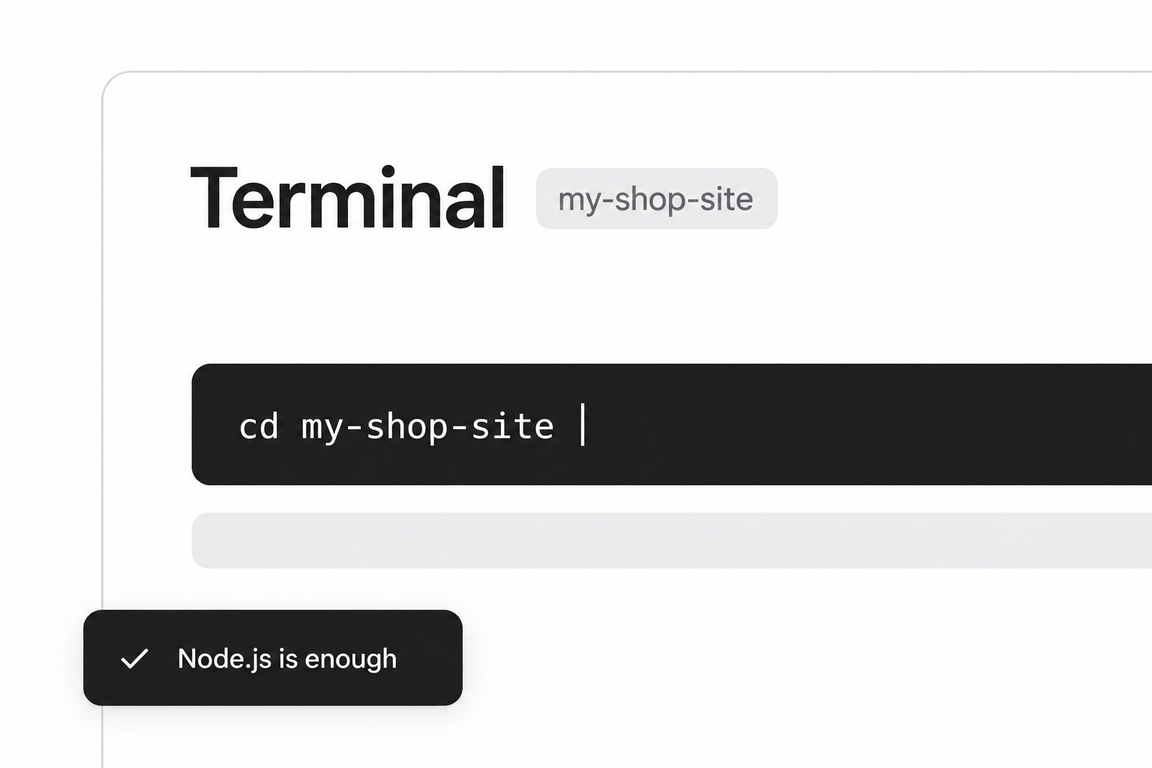
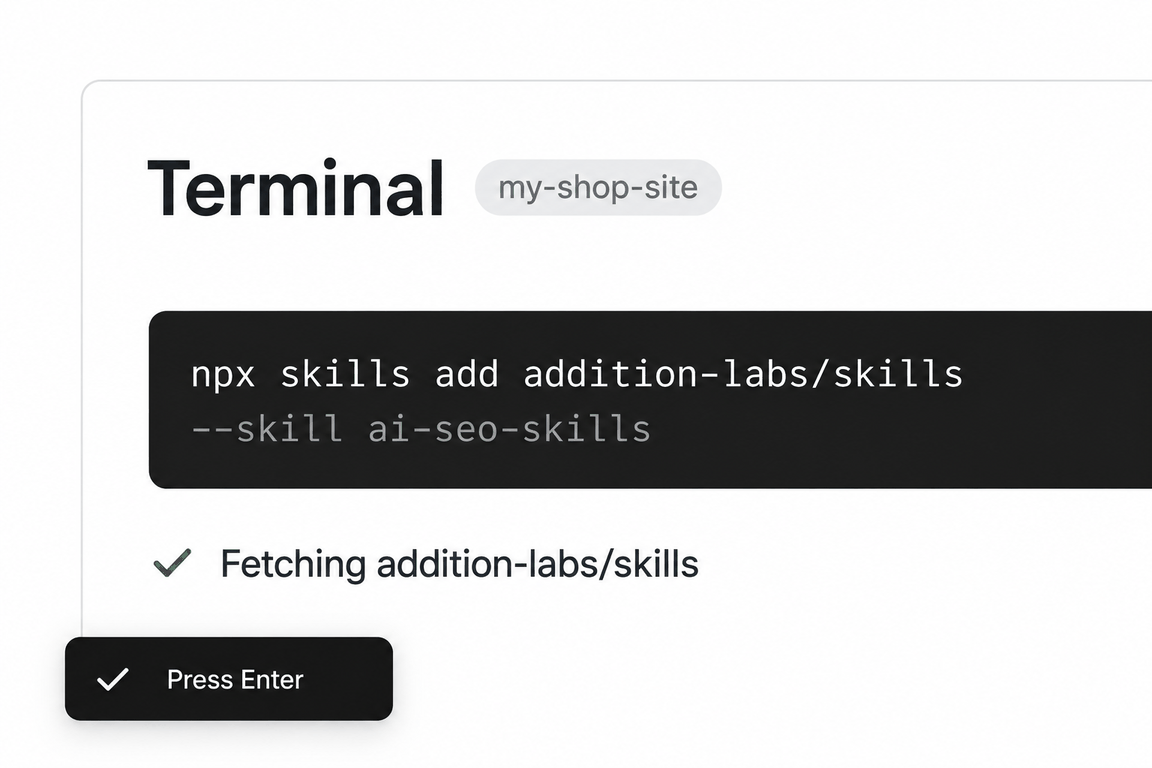
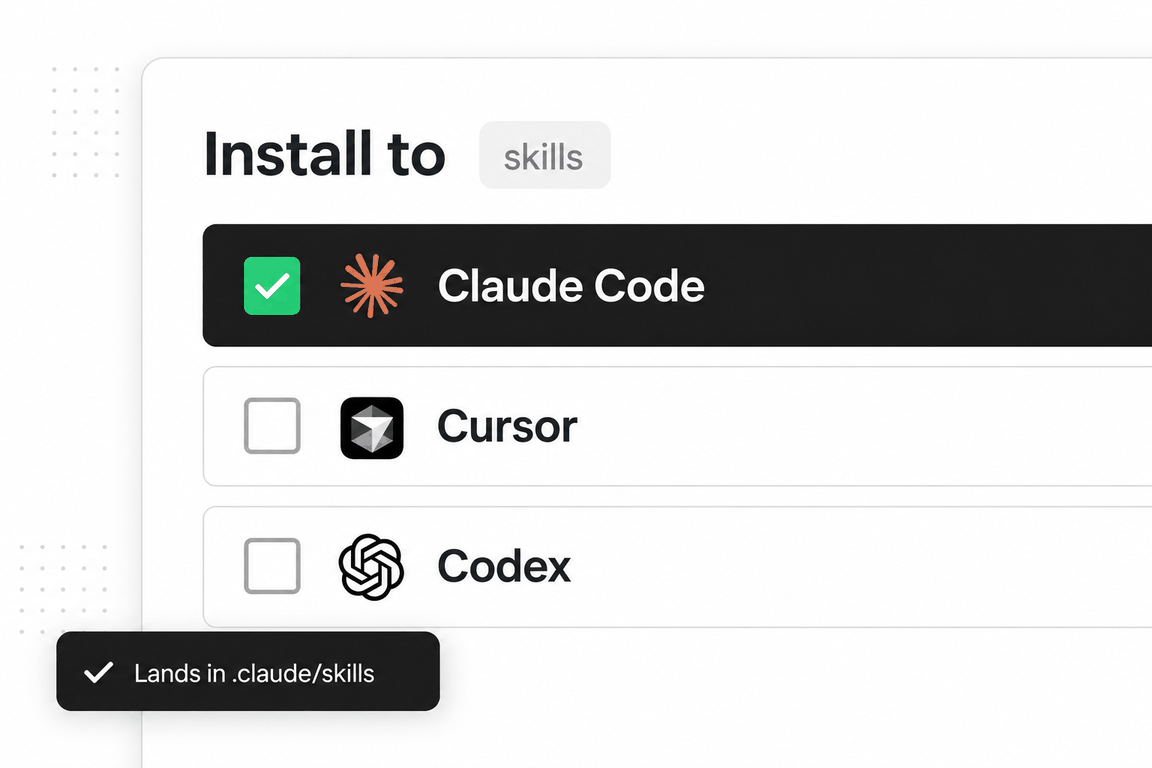
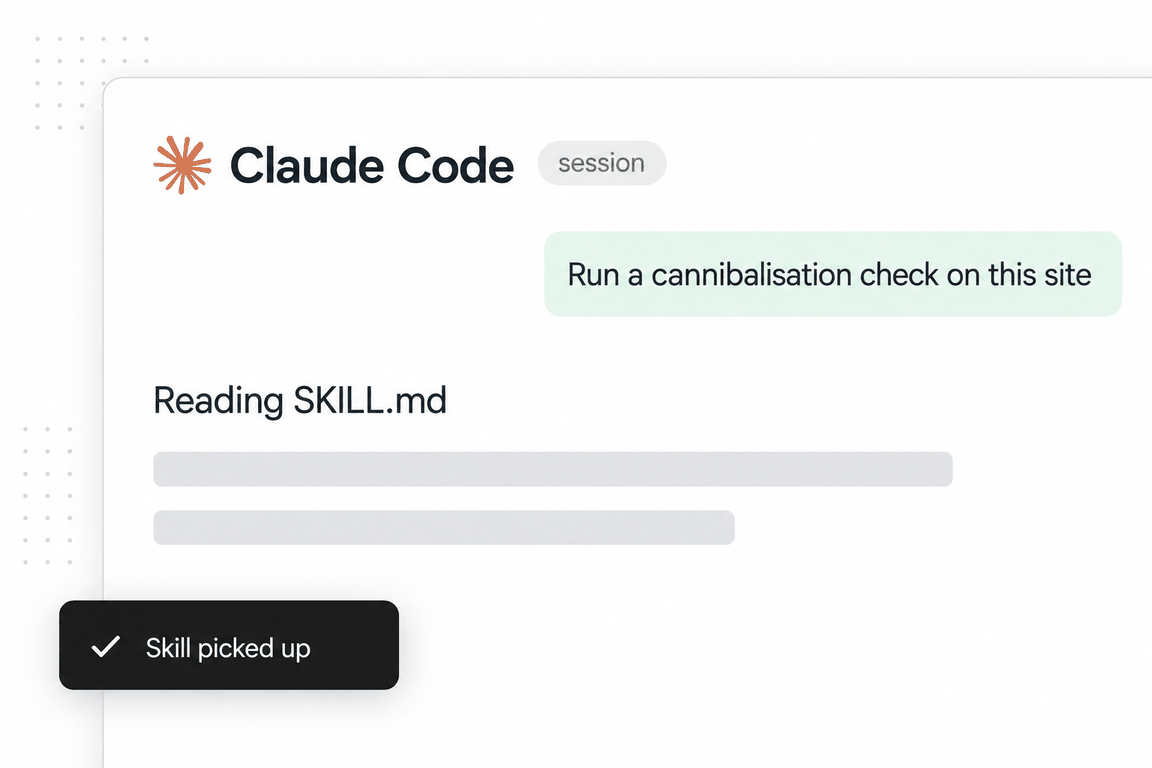
seo-content-briefaddition-labs/skillsMIT licencev1.0.0updated 2026-09-10
The brief has a fixed shape: search intent, a competitor table (H2s, word count, a 40-point score, the main gap), gaps and opportunities, the winning outline with word count and keyword guidance per section, meta tags, a unique-angle paragraph, E-E-A-T requirements, and three to five internal links from your real sitemap.
Two rules make it better than a template. The Website Relevance Rule: every heading must be something the site can credibly write about, checked against its homepage and sitemap. The Site Structure Coverage Rule: a hub page brief must reference every real child category and invent none.
It is on the AEO shelf because its outline marks featured-snippet targets and asks for direct answers per section, which is the same structure AI answer engines extract. With DataForSEO or Ahrefs MCP it pulls live SERP and volume data; without them it works from what your agent can fetch.
When to use it
The phrases that trigger it
Say any of these and an agent that has the skill installed will usually load it; you can also call it by name. The phrases are the skill’s own, from its description.
- content brief
- write a brief
- content outline
- blog brief
- service page brief
- writing brief
- content plan
What’s inside
The playbook, section by section
Improve mode versus new-page mode
An existing URL gets a keep-versus-add outline and a warning against full rewrites; a keyword gets a brief built from scratch.
Competitor scoring
Depth, Formatting, SEO and UX, ten points each; non-competitors (Wikipedia, Reddit, Amazon, tool vendors, job boards) filtered by a reference list.
Keyword placement without density targets
Title, H1, slug, meta, first 100 words and one alt text; never every H2; density checks demoted to a stuffing heuristic.
Meta tag limits
Title 50 to 60 characters with the keyword first; description 130 to 150, active voice, no brand at the end, no quotation marks.
Output language rule
No framework or tool names in the brief; it must read as plain professional advice to a business owner or writer.
Reference files the agent loads on demand
3 files in the skill folder, read only when an instruction calls for one.
excluded-domains.md- The domains to filter out of competitor scoring: they rank for the term but are not business competitors.
keyword-density.md- A readability and stuffing heuristic for keyword placement; it is explicit that this is not a Google percentage rule.
page-type-templates.md- Brief templates by page type: blog, landing, product, comparison, with the sections each one needs.
See it in action
One real run, in full
The request on the left went to the skill as installed. On the right is everything it returned, unedited; scroll inside the box to read it all.
Write a new-page content brief for the keyword 'demand generation vs lead generation' on addition-labs.com (fetch the homepage and https://addition-labs.com/sitemap.xml for site context). We cannot pull live SERP data from here, so identify the top competitors from what you can fetch and say what you could not verify.
Content Brief: demand generation vs lead generation
Brief mode: switched from "new page" to "improve existing page". The sitemap you asked me to fetch lists https://addition-labs.com/resources/compare/demand-generation-vs-lead-generation (live, HTTP 200, published 25 Aug 2026, updated 6 Sep 2026, about 2,470 words, 11 cited sources, linked from the /resources/compare hub). Creating a second page on the same keyword would split the site's own relevance between two URLs. This brief is therefore written against the existing URL: it marks what to keep, what to strengthen, and what to add. If you still want a separate new page, tell me the intent it should serve that this one does not, and I will re-cut it.
Data caveat. No live SERP data was available. The six competitors below are the comparison pages I could fetch and read in full; I chose them because they are the direct "demand generation vs lead generation" articles that Addition's own page already cites, published by the brands that dominate this topic. I could not verify that these six are the current top results, their positions, search volume, keyword difficulty, or which SERP features show. Word counts are my own extraction from each page's article body and are approximate.
Search Intent
Informational with a commercial undertone: a B2B marketer, founder or RevOps lead who has to explain, budget for, or report against one of the two terms, and is usually deciding which to fund next. Knowledge level is intermediate; they already know what a lead is and are past the dictionary stage. Every fetched competitor answers with the same format: a long-form comparison article (1,500 to 4,200 words) with two definitions up top, a side-by-side comparison block, a "how they work together" section, tactics and metrics, and a short FAQ. I could not confirm which SERP features (AI Overview, People Also Ask, featured snippet) appear for this query.
Competitor Analysis
Scores are Depth / Formatting / SEO / UX, each out of 10. All six pass the excluded-domain filter.
| # | URL | Key H2 Sections | Est. Words | Score | Main Gap |
|---|---|---|---|---|---|
| 1 | leadfeeder.com/blog/comparisons/demand-generation-vs-lead-generation/ | 60-second summary; What is lead gen; What is demand gen; The difference (goals, engagement, impact); At-a-glance table; How they work together; Should demand or lead gen be your priority; 5 demand gen tactics; 5 demand capture tactics; FAQs | ~4,170 | 9/8/7/6 = 30/40 | Longest and most complete, but the capture tactics pivot into a product pitch; title tag is only 32 characters; no worked example of a real budget decision |
| 2 | pipeline.zoominfo.com/marketing/demand-generation-vs-lead-generation | What is the difference; Side-by-side comparison (table); How they work together; When to prioritize; Tactics for each; How to measure success; How B2B data powers both; FAQ | ~2,590 | 8/8/7/6 = 29/40 | Title tag renders as just "ZoomInfo"; no JSON-LD detected in the HTML; places "demand capture" inside demand gen and then opposite it on the same page; ~660 KB page |
| 3 | cognism.com/blog/demand-generation-vs-lead-generation | What is demand gen; What is lead gen; The difference; Which is better; How they work together; Key takeaways; Course CTA | ~1,540 | 5/6/8/7 = 26/40 | Shortest of the six; promises a "side-by-side" in the title but has no comparison table; contradicts the same publisher's lead gen page, which says the two terms are the same |
| 4 | blog.hubspot.com/sales/lead-generation-vs-demand-generation | What is demand gen (goals, how it works); What is lead gen (goals, how it works); Demand gen vs lead gen; How they come together; FAQ (4 questions); Next steps | ~2,200 to 2,600 | 6/6/8/5 = 25/40 | Generic definitions; the same template download block interrupts the article three times; one comparison table; no priority test, no timelines |
| 5 | infuse.com/insight/what-is-demand-generation-demand-gen-vs-lead-gen/ | Executive summary; What is B2B demand gen; What is B2B lead gen; Key differences; 7 reasons to invest in demand gen; How they work together; 4-step demand gen guide; Key takeaways | ~3,340 | 7/6/7/5 = 25/40 | One-sided: seven sections arguing for demand gen, none for lead gen; no comparison table; 160 image tags on the page; vendor-first angle |
| 6 | salesforce.com/blog/sales/demand-generation-vs-lead-generation/ | What are they and what's the difference; Goals of demand gen; Goals of lead gen; How they work together (when to focus on demand gen; lead gen tactics); Find the right balance | ~2,190 | 6/5/6/5 = 22/40 | Published March 2024 with no visible update; title tag is 46 characters (under 50); no table; article H2s are interleaved with newsletter and product blocks; only page with a worked example (a sneaker launch), which is a strength |
Competitor average: ~2,750 words.
Content Gaps and Opportunities
What the existing Addition page already does that no competitor does (keep, do not dilute):
- It is the only page that documents that the six sources disagree, quotes each in its own words with a read date, and shows one publisher holding two contradictory positions on two live pages.
- It is the only page that treats "demand capture" as a third, unhoused term and shows where each publisher puts it.
- It is the only page that separates the two circulating timelines (6 to 12 months vs 6 to 18 months) and explains that they measure different things.
- It names three situations where demand generation is the wrong thing to fund, including one that costs Addition the larger sale.
Topic gaps (no fetched competitor covers these, and Addition can credibly write them):
- "Demand Gen" the Google Ads campaign type vs demand generation the discipline. Addition sells
/services/google-ads/demand-genand publishes/resources/guides/demand-gen-campaigns. Searchers who run paid media conflate the two names. None of the six pages mention the collision. Priority: high impact, high advantage (Addition runs these campaigns), low effort. - Where search sits in each. Every competitor treats SEO and paid search as one bullet in a tactics list. Addition's whole business is search; a section on which search work counts as demand creation (informational content, AI visibility) vs demand capture (high-intent keywords, Shopping, remarketing) is ownable. Priority: high.
- A "write your definition down" template. The existing page tells readers to pick one of five positions and write it down, but gives no format. A 60 to 80 word fill-in block is cheap and unique. Priority: medium impact, low effort.
Depth gaps (the existing page covers these thinner than competitors):
- No at-a-glance comparison table. Three of six competitors have one (goal, funnel stage, audience, metrics, timeline, typical channels). The Addition page has the content in prose and in three specialist tables, but no single scannable summary. Priority: high; this is the most likely snippet and AI-citation block.
- No tactics section. Leadfeeder, ZoomInfo and Salesforce each list concrete tactics per side. The Addition page has none. Keep it short and keep it to what Addition actually delivers (search, AI visibility, ads, landing pages, CRO); do not copy webinar and freemium lists the site does not offer.
- No metrics side by side. The metrics for each are named in prose in two different sections. Competitors put them in one table. Priority: medium.
- No worked example. Only Salesforce has one. A short example built on one of Addition's own case studies (the sitemap lists lacoart, megapass, myphotostation, pt, visard) would be stronger than a hypothetical, but only with real figures the case study already publishes. If no case study carries a demand vs capture split, use a clearly labelled hypothetical and say so.
Quality gaps (where competitors are weak and the Addition page can pull ahead):
- Salesforce has not been updated since March 2024; Cognism's is the shortest; INFUSE argues one side only; HubSpot interrupts itself three times. Addition's "read on 6 September 2026" sourcing already beats all of them on freshness and provenance. Keep the read dates and re-verify them on each update.
- Author credibility: the Addition page is bylined "By the Addition team" with no person, credentials or bio. Four of six competitors show a named author. This is the cheapest E-E-A-T fix on the page.
- Title tag and meta description: the current title is 63 characters (over 60) and the meta description is roughly 290 characters (far over 150). Both will be truncated. Fixes below.
Winning Outline
Sections marked KEEP already exist and should be preserved with light edits. STRENGTHEN exists but is thin. ADD is new.
H1: Demand Generation vs Lead Generation: Five Published Positions (KEEP; primary keyword at the front) URL Slug: /resources/compare/demand-generation-vs-lead-generation (KEEP; do not change the URL) Target Word Count: ~3,100 words (competitor avg: ~2,750 words; current page ~2,470). The target is the competitor average plus the four additions below, not padding.
Intro: direct answer (KEEP, tighten to 40 to 60 words) (FS target) ~60 words. The current opening ("Demand generation creates interest before someone is ready to buy. Lead generation captures contact details from someone already showing intent...") is the right answer-first paragraph. Keep the primary keyword in the first sentence. Keyword: primary, exact match, once.
H2: Demand generation vs lead generation at a glance (ADD) (FS target) ~150 words plus a table. Rows: what it does, funnel stage, who it reaches, what gets counted, time to show results (quote the two published durations as the page already does), typical search work involved. Two columns. Add one image or diagram of the table with alt text containing the primary keyword. Keyword: primary in H2. Body: secondary "demand gen vs lead gen" once.
H2: Fund the priority your market needs before settling the definition (KEEP) ~350 words. Existing decision table stays as is. Keyword: secondary "which to prioritise" phrasing in body; primary once, naturally.
H2: Five published positions with one publisher holding two of them (KEEP) ~500 words. The core information gain. Do not shorten. Add a one-line summary above the table for readers who skim. Keyword: no primary needed in H2; body already carries "demand generation" and "lead generation" through the quotes.
H2: Demand generation on its own terms (KEEP, strengthen) ~300 words. Keep the definitions and the five awareness metrics. Add: which search work counts as demand creation (educational content, category guides, AI visibility so the brand is named when buyers ask an assistant). Keyword: secondary "demand creation" in body; link to /services/aeo/ai-visibility.
H2: Lead generation on its own terms (KEEP, strengthen) ~300 words. Keep the "current need and budget" qualifier and the metrics list. Add: which search work counts as capture (high-intent keywords, Shopping, remarketing, conversion-focused landing pages). Keyword: secondary "B2B lead generation" in body once; link to /services/google-ads/paid-search.
H2: Where demand capture sits (KEEP) ~350 words. Existing table and analysis stay. Keyword: secondary "demand capture" in H2 (already there).
H2: "Demand Gen" campaigns are not demand generation (ADD) ~200 words. The Google Ads campaign type named "Demand Gen" is one paid campaign format inside one channel, not the discipline; describe its placements from Google's own campaign documentation, cited with a read date. Explain the name collision in plain language and point to the guide and the service page. Keyword: secondary "demand gen campaigns" in H2; primary once in body. Format: short paragraph plus a two-row "the discipline / the campaign type" mini table.
H2: Metrics for each, side by side (ADD) ~150 words plus a table. Left column: the five awareness measures already named on the page. Right column: the six lead measures already named. Third column: what each number is silent about. Keyword: secondary "demand generation metrics" in body. Link to /resources/glossary/cost-per-lead and /tools/cost-per-lead-calculator.
H2: How long demand generation takes to show results (KEEP) ~250 words. Existing duration table stays. Keyword: secondary "how long does demand generation take" in H2 (already there).
H2: When demand generation is the wrong thing to fund (KEEP) ~350 words. Keep the three situations. Add a 60 to 80 word fill-in block: "Our definition: at [company], demand generation means ___ and is measured by ___; lead generation means ___ and is measured by ___; a lead is someone who ___." Format: definition box. Keyword: primary once in body.
H2: Worked example: one budget, two instruments (ADD) ~200 words. Build on a published Addition case study only if it carries real figures for both awareness work and capture work; otherwise write a clearly labelled hypothetical ("illustrative, not a client result"). Show the same spend routed to creation vs capture and what each would be reported against. Keyword: variation "demand gen or lead gen" once. Do not invent numbers.
H2: Sources (KEEP) ~150 words. Keep the 11 entries with read dates. Re-verify each on update and refresh the read date.
H2: Questions people ask (KEEP, expand from 4 to 6) (FS targets) ~300 words. Keep the four existing. Add two, 40 to 60 words each: "Is Google's Demand Gen campaign the same as demand generation?" and "Does SEO count as demand generation or lead generation?" Keyword: each answer uses the primary or a close variation once.
H2: Where to go next (KEEP) ~80 words. Existing five links stay; add the demand gen campaigns guide.
Per-section keyword rule of thumb for the writer: the primary keyword appears in the title, H1, slug, meta description, first sentence, one H2 (the new at-a-glance section), and one image alt. Elsewhere use the two halves separately ("demand generation", "lead generation") and the variations listed here. Do not add the full phrase to every H2.
Secondary keywords (5 to 8, use in H2/H3 and body): demand gen vs lead gen; demand capture; demand creation; B2B demand generation; B2B lead generation; demand gen campaigns; demand generation metrics; lead generation metrics.
Semantic terms (10 to 15, use naturally in body): top of funnel; brand awareness; buyer intent; pipeline; marketing qualified lead (MQL); sales qualified lead (SQL); cost per lead; share of voice; lead scoring; lead nurturing; buyer journey; conversion rate; funnel stages; high-intent keywords; AI visibility.
Recommended Meta Tags
Title Demand Generation vs Lead Generation: 5 Positions | Addition (60 characters. Current title is 63 and will be cut.)
Meta Description Demand generation creates interest; lead generation captures it. Compare the five published definitions side by side and decide which to fund first. (148 characters. Current description is roughly 290 characters and names a competitor; replace it.)
Unique Angle and Information Gain
The page's existing angle is already the information gain no competitor has: it does not pick a definition, it documents that the six most-cited sources publish five incompatible ones, quotes each with a read date, and shows that one publisher contradicts itself across two live pages. The update adds three things none of the six fetched pages contain. First, an operator's view of where search work lands on each side (which keywords, content and AI-visibility work create demand, which capture it), which Addition can write because search is the whole business. Second, the naming collision between "Demand Gen" the Google Ads campaign type and demand generation the discipline, which no competitor addresses and Addition sells and documents. Third, a fill-in definition template that turns the page's advice ("write your version down") into something the reader can do in two minutes. A worked example from a real Addition case study would add a fourth, but only with figures that case study already publishes; a hypothetical must be labelled as one.
E-E-A-T Requirements
- Replace "By the Addition team" with a named author, a one-line credential relevant to B2B search and demand work, and a link to a bio (the
/aboutpage exists; a person block on it is enough). - Keep the "Updated [date]" line and the per-source "read [date]" stamps; re-verify all 11 sources on each update so no read date goes stale.
- Keep every claim about a competitor's position as a direct quote with a link, as the page does now; do not paraphrase a position into something stronger than the source says.
- Where the new sections make a claim about Google's Demand Gen campaign type, cite Google's own campaign documentation with a read date.
- The worked example must either cite a published Addition case study by URL or be labelled illustrative. No invented client numbers.
- Keep the disclosure already on the page that Addition sells demand and search work, so the "when demand generation is wrong" section reads as against-interest.
- Add an image alt text containing the primary keyword on the at-a-glance table image; the page currently has no image carrying it that I could detect.
Internal Linking Opportunities
This page is a spoke under the /resources/compare hub and sits beside the B2B guides. Keep the six existing internal links (b2b-demand-generation, b2b-lead-generation, b2b-marketing-funnel, lead-nurturing, lead-scoring, services/seo/b2b) and add:
- Anchor "Demand Gen campaigns" →
/resources/guides/demand-gen-campaigns(from the new naming-collision section) - Anchor "Google Ads Demand Gen management" →
/services/google-ads/demand-gen(same section, one line lower) - Anchor "AI visibility" →
/services/aeo/ai-visibility(from "Demand generation on its own terms", where AI visibility is named as demand creation) - Anchor "cost per lead" →
/resources/glossary/cost-per-lead, and "cost per lead calculator" →/tools/cost-per-lead-calculator(from the new metrics table) - Anchor "marketing qualified lead" →
/resources/glossary/marketing-qualified-lead(from the lead generation metrics list, where MQL first appears)
Also add a reciprocal link from /resources/guides/demand-gen-campaigns back to this page with the anchor "demand generation vs lead generation", so the campaign guide resolves the same name collision from its side.
What I could not verify
- Which pages actually rank in the top 5 for the keyword, their positions, and whether any of the six above is absent from the live SERP.
- Search volume, keyword difficulty, and which SERP features (AI Overview, People Also Ask, featured snippet) appear.
- Exact competitor word counts (my extraction, approximate to a few hundred words on the pages with heavy templating: HubSpot, Salesforce).
- Whether any Addition case study contains figures usable for the worked example; I did not read the case study pages.
What this run could not do
No live SERP positions to confirm the six competitors are the current top five; no keyword volume, difficulty, intent or SERP-feature data (the optional DataForSEO and Ahrefs tools were not connected); competitor word counts are approximate and flagged; the worked example is a conditional instruction, with no figures filled in. The request said "new page" but the page already existed, so the brief switched to the skill's improve mode.
Method behind it
Where we would differ, and why
Our B2B content marketing guide shows what a brief has to contain before we let a piece be written: the question, the falsifier, the source pool with its minimums, and the perspective with its alternatives. The skill produces the competitive outline; the guide adds the evidence discipline that keeps the piece honest.
The skill’s information-gain rule is right and its competitor scoring is subjective: four ten-point scales assigned by the model in one pass. Use the gaps it names; do not rank competitors by its score.
It targets featured snippets per section. Featured snippets have been shrinking as AI Overviews expand; the direct-answer structure still helps, the label is dated.
SKILL.md
The file the agent reads
Written by Daniel Agrici and published under the MIT licence. Read the full file (1,577 words) on GitHub, at the commit we reviewed: AgriciDaniel/claude-seo/skills/seo-content-brief/SKILL.md. The reference files are in the same folder.
Questions
Questions people ask before installing
Does it need live SERP data?
No, but it is better with it. Without DataForSEO or Ahrefs it identifies competitors from what it can fetch and is told to say what it could not verify.
Can it brief a page that already exists?
Yes, that is improve mode: it keeps what is strong, marks what is thin or missing, and does not recommend a rewrite when targeted changes will do.
Is it an AEO tool or an SEO tool?
Both. The outline it writes is answer-first per section with snippet targets, which is what answer engines extract, and the same structure ranks in classic search.