
CONTENT SKILL
Content quality and E-E-A-T score
Content quality and E-E-A-T scoring against Google’s own who-how-why test, with an AI citation readiness score and a deterministic draft cleanup that strips invisible Unicode watermarks and AI-typical phrasing.
No key, no account needed Claude Code
bash install.sh # from a clone of github.com/AgriciDaniel/claude-seo, pinned to v2.3.1Run this in a terminal inside your project folder. Claude Code, Cursor and Codex then read the skill from where it lands.
- Step 01Open a terminal in your project folder
- Step 02Paste the command and press Enter
- Step 03Pick the agents to install to
- Step 04Ask the agent for the job; it reads the skill
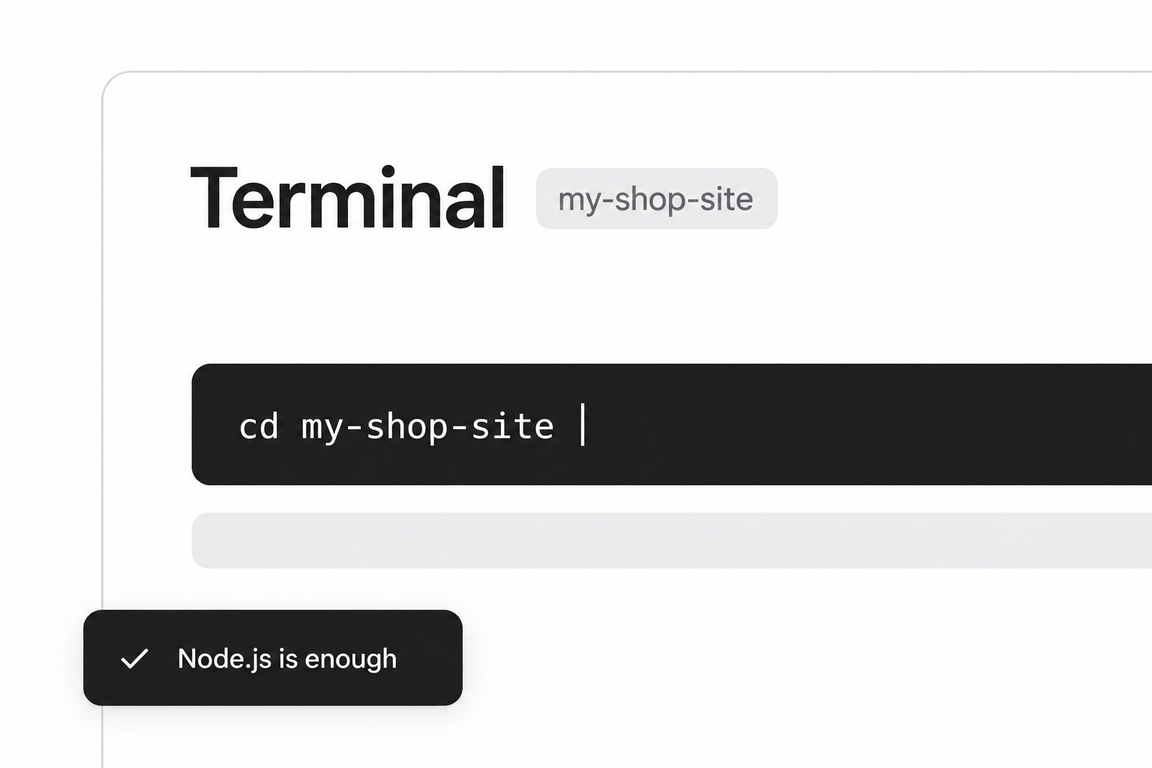
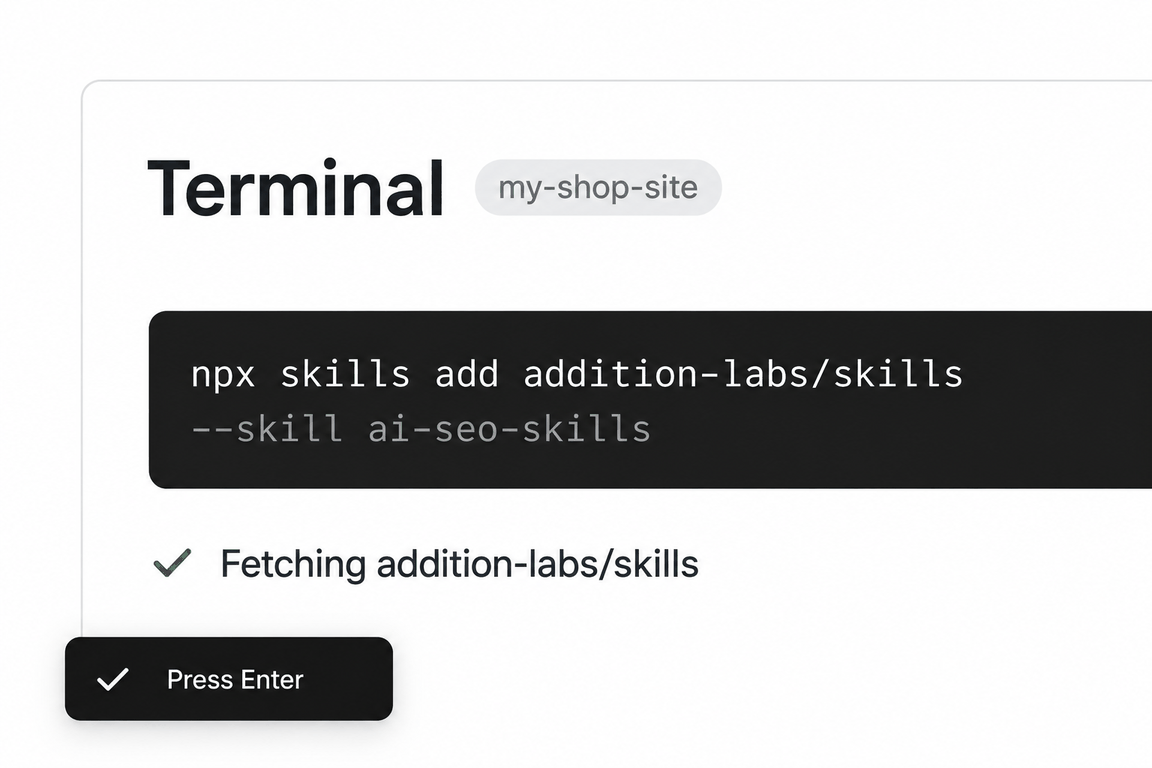
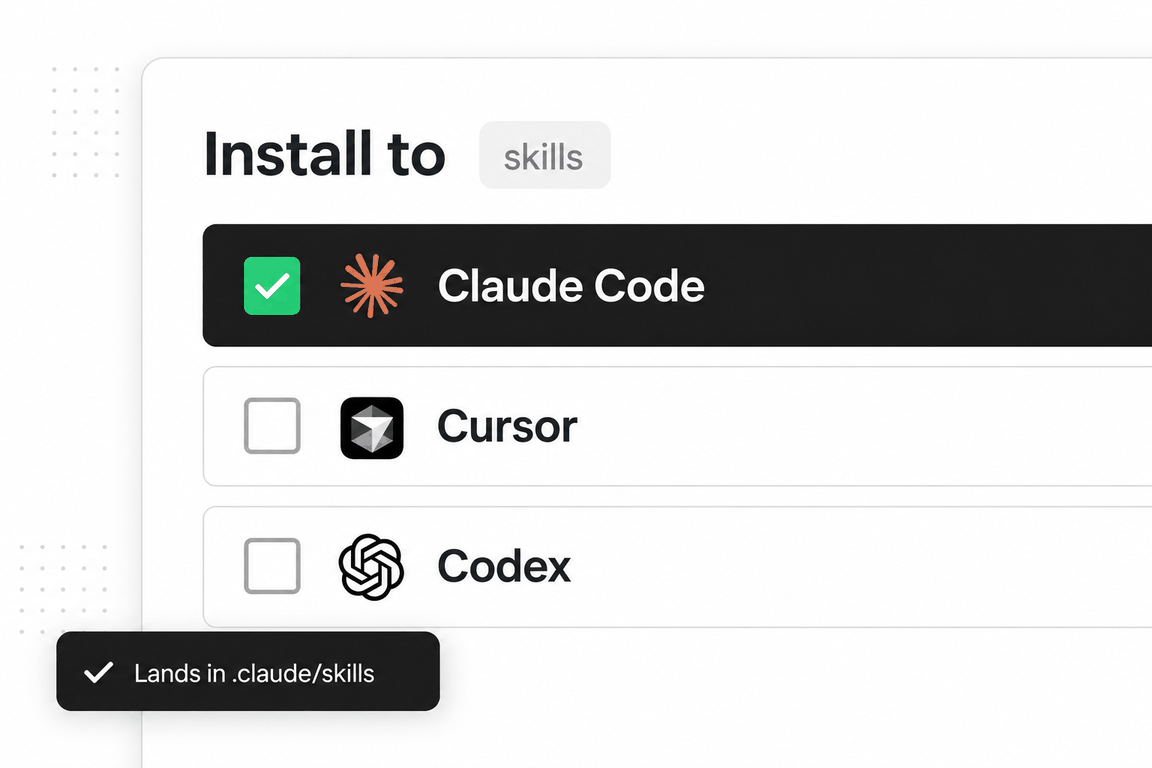
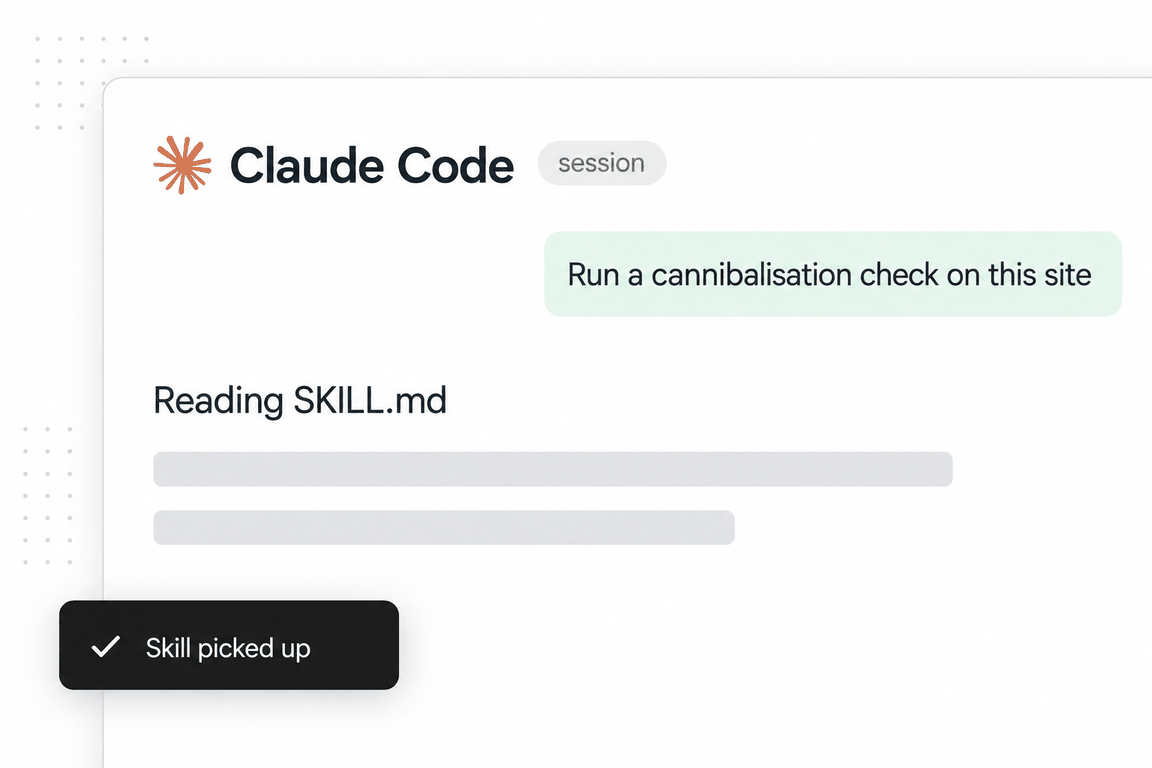
seo-contentAgriciDaniel/claude-seoMIT licencev2.3.1updated 2026-09-10
It begins with Google’s three questions from the helpful-content guide, who created it, how, and why, and treats them as the gate before any sub-score. Then experience, expertise, authoritativeness and trust get 20, 25, 25 and 30 points, ordered by Google’s stated "trust is most important", and the skill says out loud that the split is its own model.
It is careful where most content skills are not: word counts are floors not targets, Flesch is not a ranking factor, FAQPage no longer produces Google rich results, the Helpful Content System merged into core in March 2024, and "AEO and GEO are rebranded SEO" per Google’s June 2026 guide.
The cleanup script is the concrete tool: two passes, one removing zero-width and directional characters and Unicode tag smuggling, one making conservative one-to-one swaps of AI-typical phrases. It states that statistical watermarks cannot be removed and declines to launder content you do not own.
When to use it
The phrases that trigger it
Say any of these and an agent that has the skill installed will usually load it; you can also call it by name. The phrases are the skill’s own, from its description.
- content quality
- E-E-A-T
- readability check
- thin content
- content audit
- humanize
- AI phrasing
- remove watermarks
- invisible characters
What’s inside
The playbook, section by section
Who, how, why
Visible byline and credentials; process disclosure where readers would ask, especially for AI-assisted work; written to help, not to attract clicks.
Content metrics with caveats
Page-type coverage floors (homepage 500, service 800, blog 1,500, product 300+), readability as a quality indicator not an SEO metric, 3 to 5 internal links per thousand words.
AI content assessment
Raters assess low-quality, scaled or copied patterns, not AI authorship; the markers are generic phrasing, no original insight, repetitive structure, no attribution, inaccuracies.
Honest scoping
Per Google’s June 2026 note on third-party tools, the skill’s scores are heuristics with no access to ranking data, and reports must say so.
Draft cleanup
invisible_removed and changes logged in JSON; emoji sequences preserved; nothing paraphrased or added.
Output tables
Content quality out of 100, the four-factor E-E-A-T breakdown with key signals, AI citation readiness out of 100, issues, recommendations.
See it in action
One real run, in full
The request on the left went to the skill as installed. On the right is everything it returned, unedited; scroll inside the box to read it all.
Run the content quality and E-E-A-T analysis on https://addition-labs.com/resources/guides/seo-audit. Run the plugin scripts through the launcher where the skill calls for them (the claude-seo plugin and its runtime data directory are installed locally). Give the score table and the issues.
Content Quality & E-E-A-T Analysis
URL: https://addition-labs.com/resources/guides/seo-audit Fetched: 2026-09-11 (HTTP 200, server-rendered article body; header/footer are injected client-side) Page type: Long-form guide (blog/guide floor: 1,500 words)
> All scores below are claude-seo heuristics, not Google-internal signals. Google publishes no numeric E-E-A-T weights; the 20/25/25/30 split is this skill's own model (trust weighted highest). Validate against Search Console before acting on ranking assumptions.
Google's Who / How / Why test
| Question | Finding |
|---|---|
| Who created it? | Byline reads "By the Addition team". No named author, no author bio page, no credentials on the page. Article schema author is an Organization, not a Person. The /about page names the founder (ex-Google Ads account manager, three years at Semrush) but nothing on this guide links to it. Weak on-page, moderate site-wide. |
| How was it created? | Strong. 19 sources listed with dates and access dates, staleness notes on old studies ("Measured 4 years ago, on a surface that has moved since"), original annotated screenshots (PageSpeed Insights failed assessment, Search Console impressions-vs-clicks), first-person process ("We check this pair first on any audit"). No AI-assistance disclosure either way. |
| Why does it exist? | Reads as written to help: separates published thresholds from convention, refuses to invent a price range ("no published survey prices ecommerce SEO audits ... So there is no range here"). Commercial links to /services/seo and /shopify/seo are present but proportionate (2 of 15 internal links). Pass. |
Content Quality Score: 76/100
Composite of the E-E-A-T model (64), content metrics (word count, structure, linking, readability) and the QRG content-quality script result (84/100, zero filler or AI-pattern hits).
E-E-A-T Breakdown: 64/100 (Moderate band, 50-69)
| Factor | Score | Key Signals |
|---|---|---|
| Experience | 12/20 | Original screenshots and two custom figures (facet math, robots/noindex trap). First-person audit process ("We check this pair first"). No client case study, no before/after data from the agency's own stores. Studies cited are third-party (Vercel/MERJ, Screaming Frog, Fudge), not the author's. |
| Expertise | 17/25 | Technically accurate and deep: 75th-percentile rule, worst-of-three CWV grading, robots.txt-blocks-noindex mechanism quoted from Google Search Central, Google's four faceted-nav handling options split by intent. Correct specialised vocabulary. Every numeric claim is sourced. Deductions: no named author, no credentials, author = Organization. |
| Authoritativeness | 13/25 | Topical cluster exists (guides: ecommerce SEO, Shopify SEO, AEO vs SEO, AI search optimization; glossary: Core Web Vitals) and this page links into all of them. Publisher entity (Organization schema) consistent. Not measurable from this run: backlinks, brand mentions, citations by others; no DataForSEO/backlink tool was available, so external recognition is unknown, not absent. |
| Trustworthiness | 22/30 | HTTPS with HSTS (max-age 63072000). datePublished 2026-07-06 / dateModified 2026-09-07 in schema; "Updated 7 September 2026" visible. Sources block with access dates and honest staleness flags. Canonical self-referencing. /about, /contact, /privacy, /terms all return 200. Deductions: header and footer are empty in the served HTML (<header id="site-nav"></header>, <footer id="site-footer"></footer>) and filled by JS, so contact/privacy/about links are not in the raw document; no named author; publication date not shown on-page (only "Updated"). |
Content metrics
| Metric | Measured | Guideline | Verdict |
|---|---|---|---|
| Word count (main content) | 4,031 (parse_html: 4,114 whole page) | Guide floor 1,500 | Pass |
| Flesch Reading Ease | 57.5 (heuristic syllable count) | 60-70 general audience | Slightly below; expected for a technical audience. Not a ranking factor. |
| Grade level | ~9.4 (Flesch-Kincaid) | Match audience | Fine for ecommerce operators |
| Avg sentence length | 16.8 words (236 sentences) | 15-20 | Pass |
| Paragraph length | avg 3.7 sentences | 2-4 | Pass (one 12-sentence block is the sources list) |
| Primary keyword in title / H1 / first 100 words | "ecommerce SEO audit": title yes, H1 yes, first sentence yes | Required | Pass |
| Keyword density | "SEO audit" 9x, "audit" 34x in 4,031 words (~0.2% / 0.8%) | 1-3% natural | Below the band; reads natural, no stuffing. Not worth forcing. |
| Heading hierarchy | 1 H1, 9 H2, 5 H3, no skipped levels | Logical | Pass |
| Table of contents | In-page nav with 8 anchor links | Long-form | Pass |
| Lists / tables | 4 data tables, numbered steps, ordered callouts | Where appropriate | Pass |
| Images | 8 total, 7 with descriptive alt; 1 empty alt on a 22x22 icon (decorative) | Alt on meaningful images | Pass |
| Internal links | 15 (3.7 per 1,000 words), descriptive anchors | 3-5 per 1,000 words | Pass |
| External links | 20, all rel="noopener nofollow"; Google docs, web.dev, HTTP Archive, arXiv, Ahrefs | Authoritative, reasonable count | Pass; see Issue 6 |
| Freshness | Updated 7 Sep 2026 (4 days old); published 6 Jul 2026 | Visible dates, <12 months | Pass |
QRG content-quality script (content_quality.py, run through the launcher)
| Signal | Value |
|---|---|
| filler_score | 0 |
| ai_pattern_score | 0 |
| information_density | 0.454 |
| repetition_score | 17 |
| overall_quality | 84/100 |
| flags | none |
| tokens / unique | 3,921 / 927 |
No filler phrases and no LLM-typical phrasings matched. The script is advisory and does not make an "AI or not" verdict.
AI content assessment
None of the low-quality AI markers are present: phrasing is specific, claims carry numbers with sources, structure is not templated, and there is original insight (the three-tier evidence sort, the revenue-share indexing rule). The one shared marker with low-quality AI content is no author attribution, which is a fixable presentation gap rather than a content gap.
AI Citation Readiness: 82/100
| Signal | Status |
|---|---|
| Answer-first opening | Yes. First sentence defines the term; second gives the only published threshold with numbers (2.5 s / 200 ms / 0.1). |
| Quotable, self-contained statements with facts | Yes, throughout ("Faceted navigation alone accounts for about half the crawling problems reported to Google", "48 percent of origins passing all three metrics on mobile and 56 percent on desktop"). |
| Structured data | Article + BreadcrumbList + FAQPage (5 Q&A pairs mirrored in visible content). FAQPage no longer yields Google rich results; harmless but not a lever. |
| Heading hierarchy | Clean H1 > H2 > H3; H2s are phrased as the questions a searcher asks ("What an audit costs", "How you know the audit worked"). |
| Tables / lists for comparative data | 4 tables (evidence tiers, Googlebot vs AI crawlers, faceted-nav options, sources). |
| Attribution and source citations | 19 dated sources with access dates; inline quotes attributed to Google Search Central. |
| First-party data | Weak. No original dataset or client measurement; all statistics are third-party. |
| Entity clarity | Organization defined; no Person entity for the author; no sameAs on the Organization in this page's schema. |
| Topical authority cluster | Present and interlinked (5 sibling guides/glossary entries). |
Deductions: no first-party data (-10), no Person/author entity (-5), Organization without sameAs (-3).
Issues Found
- No named author or credentials on the page (High). "By the Addition team" plus
author: Organization. The site does have a credentialed founder (Google, Semrush) on /about, but this guide never surfaces that. For an SEO guide, readers and raters expect a "who". - Publication date not visible on-page (Medium). Only "Updated 7 September 2026" is shown;
datePublished(2026-07-06) lives in schema only. Update history and corrections are not exposed. - Site chrome is client-rendered (Medium).
<header id="site-nav">and<footer id="site-footer">are empty in the served HTML and populated by/assets/planPicker-*.js. Contact, Privacy, Terms and About links therefore exist only after JS runs. Googlebot renders JS; the page's own cited study says the AI crawlers it tested do not, so non-rendering agents see an article with no site-level trust links. - No first-party experience data (Medium). Every statistic is third-party. The page says "Both show up in stores that have already been audited" but gives no anonymised example, count, or before/after from the agency's own audits.
- Authoritativeness unverified (Info). Backlinks, brand mentions and third-party citations could not be measured in this run (no backlink tool). Score reflects what is visible on the site only.
- All 20 external citations are
rel="nofollow"(Low). Includes links to Google's own documentation and web.dev. Not a content-quality defect, but blanket nofollow on primary sources is an unusual editorial choice for a page whose credibility rests on those sources. - Flesch Reading Ease 57.5 (Low). Just under the 60-70 general-audience band. Technical audience makes this acceptable; not a ranking factor.
- FAQPage schema present (Info). Valid and mirrored in visible content, but FAQ rich results are no longer shown by Google for this site type. Keep or drop; no ranking effect expected.
- One decorative icon with empty alt (Info).
pen-answer.png(22x22) hasalt="". Correct for a decorative image; no action needed.
Recommendations
- Add a named author with a bio link. Byline the founder (or the auditor who wrote it), link to /about or a dedicated author page, and switch the Article
authortoPersonwithsameAspointing at the LinkedIn profile already referenced on /about. This closes the "Who" gap and the largest E-E-A-T deduction in one change. - Show both dates on-page. Display "Published 6 July 2026 · Updated 7 September 2026" and, if the update changed a figure, a one-line changelog. The page already does this rigour for its sources; apply it to itself.
- Server-render the header and footer. The trust links (/contact, /privacy, /terms, /about) should be in the initial HTML. The page's own thesis about non-rendering AI crawlers argues for it.
- Add one first-party data point. Even an anonymised aggregate from the agency's audits (for example, share of audited stores with the robots.txt + noindex conflict, or a before/after indexed-pages gap on one store) would move Experience from 12 to the high teens and give AI systems a citable original number.
- Add
sameAsto the Organization schema (LinkedIn, any verified profiles) for entity clarity. - Reconsider blanket nofollow on primary sources. Follow links to Google Search Central, web.dev and HTTP Archive; keep nofollow for commercial or unvetted sources.
- Leave readability and keyword density alone. Both are within tolerance for the audience, and forcing the density band would degrade the prose.
Data not available in this run
- Keyword volume, difficulty and intent (DataForSEO MCP not connected).
- Backlink profile and brand-mention counts (no backlink tool).
- Search Console performance for the URL (first-party source; run there before acting on ranking assumptions).
What this run could not do
No DataForSEO keyword volume, difficulty or intent data and no content-analysis summary (the MCP was not connected); no backlink or brand-mention data for the authoritativeness score; the Flesch reading-ease figure comes from a heuristic syllable count because the plugin ships no readability script; no Search Console data.
Method behind it
Where we would differ, and why
Our AI SEO guide covers the citation-readiness half with the studies behind it. The skill’s E-E-A-T half is the closest thing on this shelf to our own source rules: named authors, dated sources, and a limit stated rather than argued.
The keyword section keeps "natural density (1 to 3%)". Its sibling seo-content-brief skill in the same plugin says not to optimise to a density at all; the plugin disagrees with itself here, and the brief skill is right.
Coverage floors by page type are useful as a smell test and dangerous as a target; the skill says so, and we would still remove the table from a report to a client.
SKILL.md
The file the agent reads
Written by Daniel Agrici and published under the MIT licence. Read the full file (1,677 words) on GitHub, at the commit we reviewed: AgriciDaniel/claude-seo/skills/seo-content/SKILL.md.
Questions
Questions people ask before installing
Is the "humanize" pass a detector-beater?
No, and the skill says so: it removes invisible characters and swaps a list of tells. Statistical watermarks live in word choice and no tool removes them. It refuses to process content you do not own.
Where do the E-E-A-T weights come from?
The plugin author’s model, ordered by Google’s statement that trust matters most. Google publishes no numbers.
Does it check AI citation readiness the same way seo-geo does?
It scores a lighter version (quotable statements, structure, attribution) and hands the crawler and platform analysis to seo-geo.