
CRO SKILL
Fix one leaking flow
A resumable seven-phase journey for one leaking flow: find the leak with numbers, learn the reason from customers, fix message, offer, proof and friction in that order, and prove each fix with a pre-committed test.
No key, no account needed Claude CodeClaude Cowork
 Codex
 Cursorany agent that reads SKILL.md
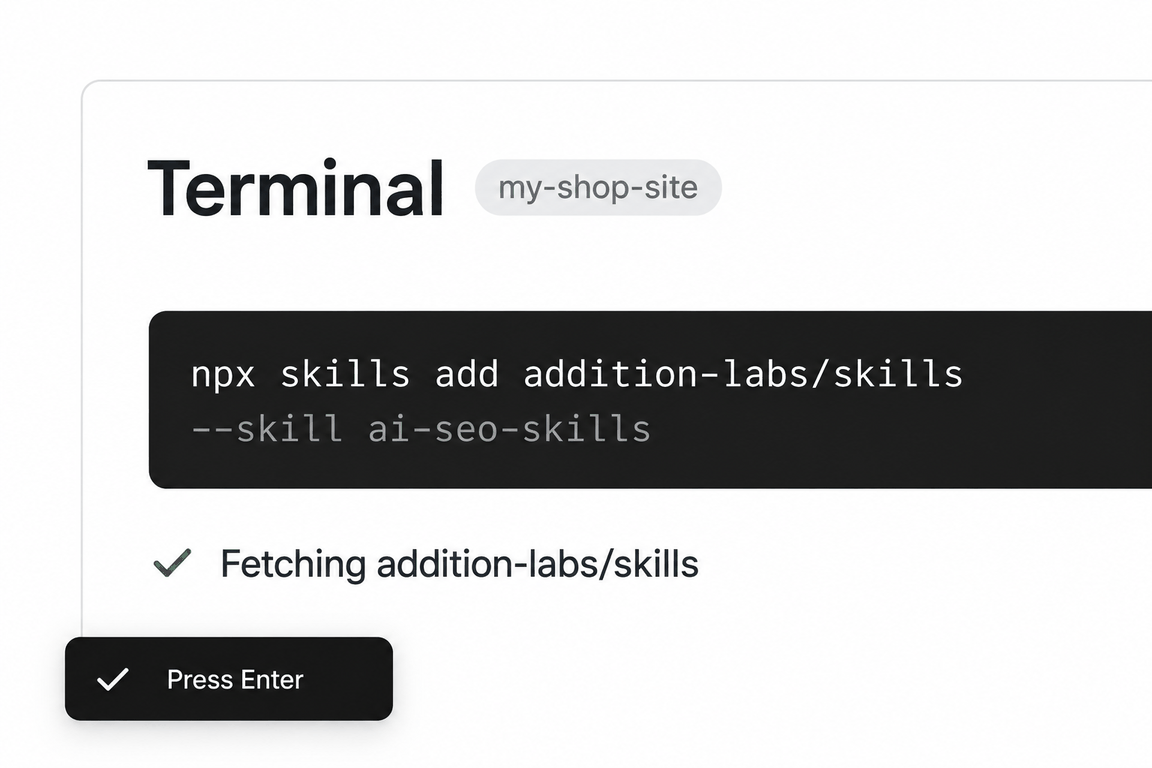
npx skills add addition-labs/skills --skill conversion-optimizationRun this in a terminal inside your project folder. Claude Code, Cursor and Codex then read the skill from where it lands.
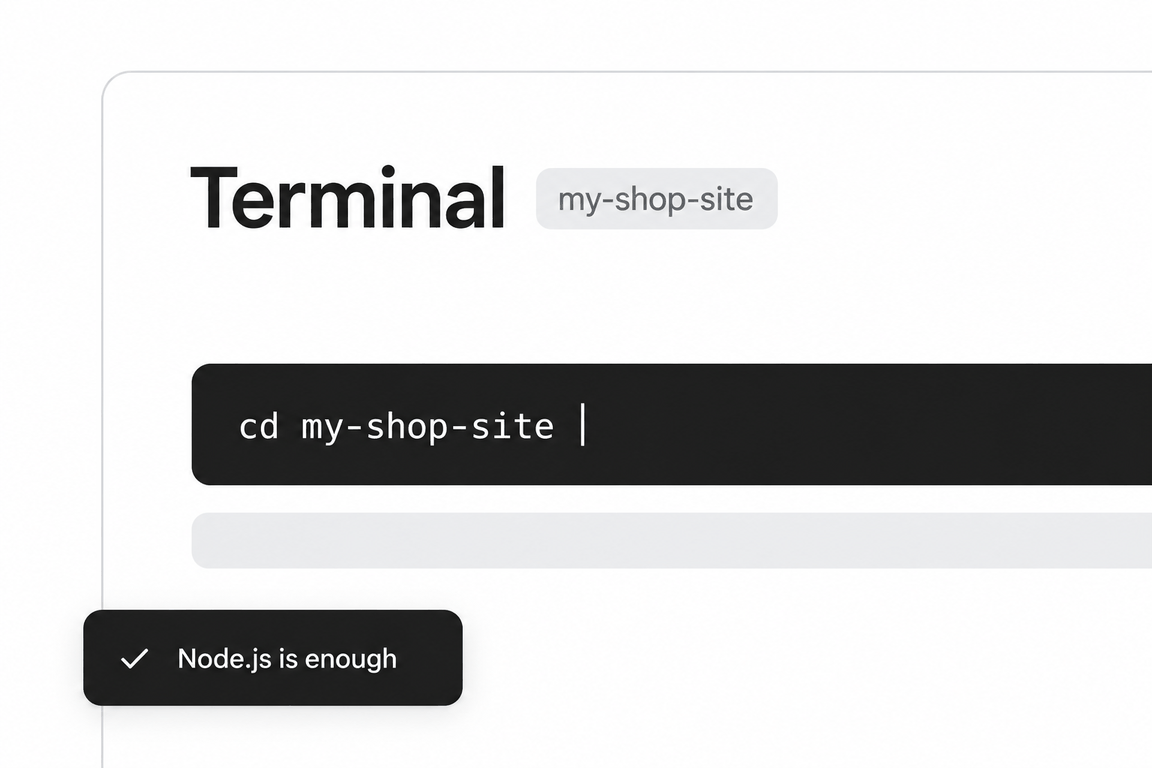
- Step 01Open a terminal in your project folder
- Step 02Paste the command and press Enter
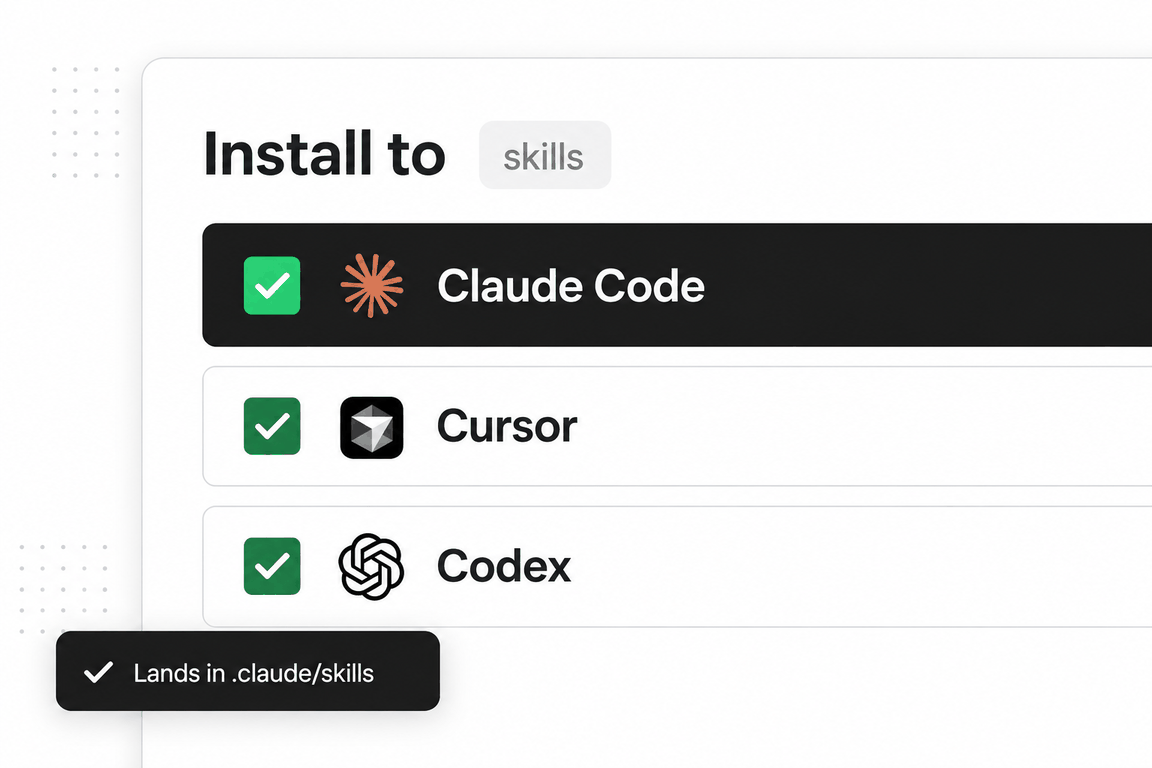
- Step 03Pick the agents to install to
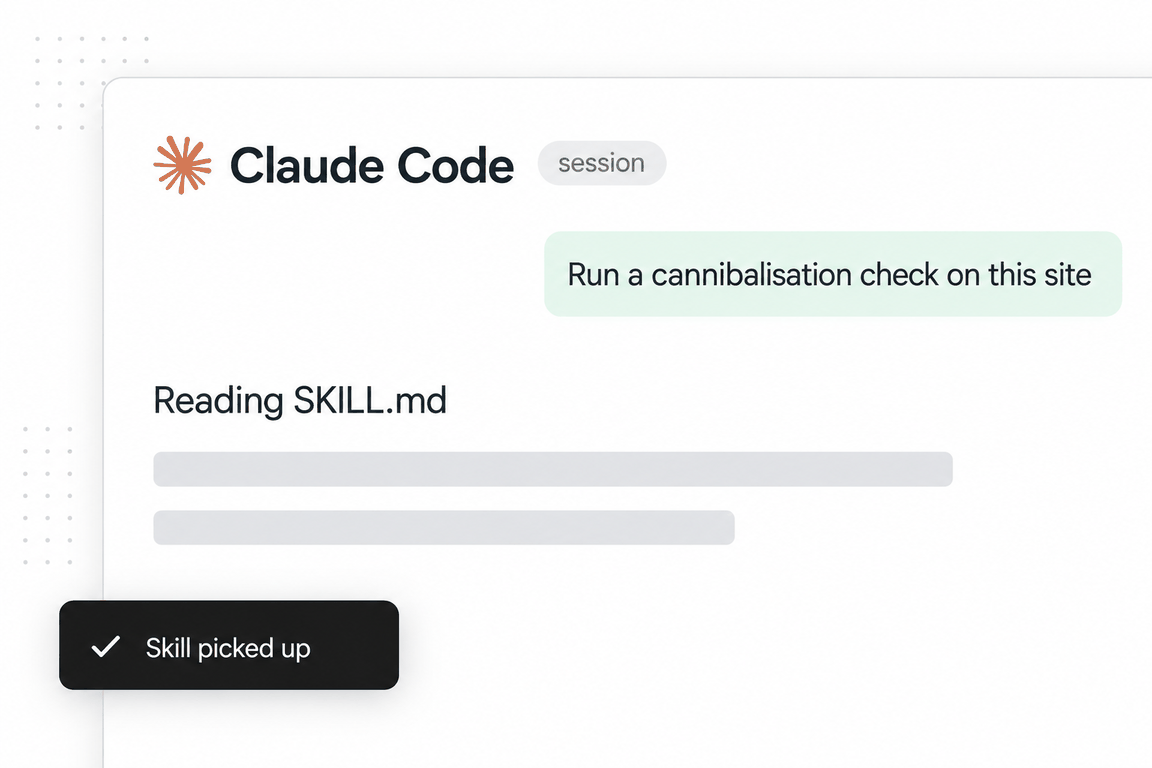
- Step 04Ask the agent for the job; it reads the skill
conversion-optimizationaddition-labs/skillsMIT licencev1.0.0updated 2026-09-10
This is a metaskill. It orchestrates six other wondelai skills (lean-analytics, cro-methodology, storybrand-messaging, hundred-million-offers, influence-psychology, design-everyday-things) phase by phase, asks you a decision question at every step, and records the answers in a docs/ folder so the journey survives across sessions.
Phases 1 and 2 are gates: no fix ships without a measured leak and a researched reason. The order after that is causal (message, offer, proof, friction), and every change lands as an experiment card with a primary metric and a guardrail.
If a constituent skill is not installed it offers to install it, and otherwise runs the phase from an inline brief. A reference file carries the artefact templates it writes.
When to use it
The phrases that trigger it
Say any of these and an agent that has the skill installed will usually load it; you can also call it by name. The phrases are the skill’s own, from its description.
- raise conversion on a specific flow
- fix checkout abandonment
- signup abandonment
- onboarding drop-off
- people start but never finish
What’s inside
The playbook, section by section
Eight operating rules
Resume first, intake on first run only, announce each phase, invoke the skill or fall back to the brief, ask every decision, present artefacts for sign-off, extend files never overwrite, every change is a test.
Seven intake questions
Which flow and its one action, where the numbers say people drop, weekly volume, voice-of-customer sources with raw text, the current offer and whether it can change, existing docs, how much of the journey you want.
Phase 1, find the leak
Funnel table with baselines and benchmarks, one metric that matters plus a counter-metric, a line in the sand.
Phase 2, research why
Objections in the customer’s words, the O/CO table, missing persuasion assets, an ICE-ranked backlog.
Phases 3 to 6
StoryBrand rewrite of the leaking step, the offer’s value equation, proof at every doubt, friction removed with Norman’s two gulfs and Baymard’s form rules.
Phase 7, prove it
Experiment cards with pre-committed sample size, duration and decision rule; low traffic gets a before/after window with a revert trigger, stated as such.
Reference files the agent loads on demand
2 files in the skill folder, read only when an instruction calls for one.
artifact-templates.md- Skeletons for every document the journey writes to docs/.
methods.md- The fallback method for each phase when a constituent skill is not installed.
See it in action
One real run, in full
The request on the left went to the skill as installed. On the right is everything it returned, unedited; scroll inside the box to read it all.
Start the journey for the enquiry flow on addition-labs.com: the contact form at https://addition-labs.com/contact, whose one action is a submitted enquiry. There is no docs/ folder yet, so run the Intake exactly as the skill defines it.
Conversion Optimization: enquiry flow on addition-labs.com
Resume check
No docs/ folder exists, so there is no docs/CONVERSION-OPTIMIZATION-PLAN.md, METRICS.md, FUNNEL.md or EXPERIMENTS.md to resume from. This is a first run. Per the operating rules, the tracker is created only after Intake, so nothing has been written yet.
What I looked at before asking
I fetched https://addition-labs.com/contact and the four scripts it loads, to ground the questions in the flow as it ships today. Read this as observation, not diagnosis (diagnosis is Phase 1 and 2).
- The page offers five ways to act, not one: a
mailto:link tosupport@addition-labs.com, an "Addition on LinkedIn" link, a "Book a meeting" button (calendar modal,POST /api/book), a "Contact our team" button (contact drawer,POST /api/leadwithsource: "contact-dock"), and a "Schedule a meeting" button (same calendar modal). - The contact drawer form has: Full name (required), Business email (required), Website URL (optional), "What outcome do you need?" textarea (optional), a honeypot field, and a "Send to our team" submit. Success state is inline text: "Got it. We will come back to you by email."
- The page copy above the form says "Leave one way to reach you ... Nothing else is asked for," while the form itself requires name and email. Noting it for Phase 2/6; not acting on it now.
- Instrumentation that exists in the shipped JS: events named
cta_open,form_start,form_submit,tool_use,source_click, and a Microsoft Clarity hook gated behind a consent flag. Whether these events are firing and being stored anywhere I cannot see from outside. - Nothing on the page states a price, guarantee, or bonus. The framing is "We are full right now. Get in line anyway."
Intake
Answer these and I will create docs/CONVERSION-OPTIMIZATION-PLAN.md with every phase statused, then ask you to confirm the plan. Each question carries the options I see and my recommendation; the choice is yours.
1. Which flow are we optimizing, and what is the ONE action at its end? You said: the contact form, one action = a submitted enquiry. Two things to pin down, because the page currently has five exits:
- (a) Is the ONE action specifically the contact-drawer submit (
POST /api/lead, sourcecontact-dock)? Or does a booked meeting (/api/book) also count as a converted enquiry? - (b) Do the
mailto:and LinkedIn links count as conversions, leaks, or out of scope?
Recommendation: ONE action = drawer submit succeeded; treat a booked meeting as a second, separately counted success (not a leak); treat mailto and LinkedIn clicks as tracked exits. A flow with five competing CTAs has no goal, so this decision scopes every later phase.
2. Where do the numbers say people drop? Paste whatever you have: sessions landing on /contact, cta_open count, form_start, form_submit, successful /api/lead posts, and the split by device and traffic source, for the last 4 to 8 weeks. Also paste any Clarity funnel or recording counts if consent is being granted often enough to have data.
- If these events are not being stored or you cannot pull them, say so. Phase 1 then starts by adding the minimal instrumentation and sits at
awaiting-evidenceuntil numbers exist.
Recommendation: even a rough weekly count of page views versus submitted enquiries is enough to open Phase 1.
3. Roughly how much traffic or volume enters the flow per week? Sessions on /contact per week, and enquiries submitted per week.
- Under roughly a few hundred sessions a week, A/B tests on this page will not reach significance. Phase 7 then runs on before/after windows with qualitative confirmation and an explicit revert trigger, recorded as
deferred: reason, never silently skipped.
Recommendation: give me the honest number; it decides the evidence standard for the whole journey.
4. What voice-of-customer sources exist or can be gotten, and can you paste the raw text of the best one? Candidates for this flow: the note / "What outcome do you need?" text of past enquiries, replies to support@addition-labs.com, discovery-call notes, Clarity session recordings on /contact, any exit survey, LinkedIn DMs.
- Phase 2 must quote the customer's own words, so I need the content, not the source name.
Recommendation: export the last 20 to 30 enquiry messages and any call notes; if none exist, say so and Phase 2 will start with a one-question exit prompt on the drawer ("What is stopping you from sending this today?").
5. What is the current offer at the conversion point, and can it change? Today the page states no price, guarantee, or bonus; the exchange is "leave your details, we come back when a spot opens," under a "we are full" framing.
- (a) Is the waiting-list framing true today, and is it fixed or negotiable?
- (b) Is there anything real you could put at the conversion point (a first audit, a defined reply time, a first-call outcome)?
- (c) Is pricing in scope at all?
Recommendation: if the capacity claim is real, keep it and treat Phase 4 as presentation only; if it is not currently true, tell me, because Phase 5 will not place a scarcity claim that cannot be verified.
6. Do docs/POSITIONING.md or docs/OFFER.md already exist from another journey? I found no docs/ folder. If positioning or offer work lives elsewhere (another repo, a brief, a brand document), point me to it so Phases 3 and 4 extend it instead of restarting.
7. How much of the journey do you want now?
- (a) Phases 1 and 2 only: measure the leak and research the reason (the mandatory diagnosis).
- (b) Phases 1 through 6: diagnosis plus the message, offer, proof, and friction fix passes.
- (c) The full loop, 1 through 7, ending with pre-committed tests or before/after windows.
Recommendation: (a) first. Phases 3 to 6 are aimed by what 1 and 2 find, and at this traffic level the evidence standard for 7 depends on your answer to question 3.
What happens next
Once you answer, I create docs/CONVERSION-OPTIMIZATION-PLAN.md from the template with every phase set to pending, deferred: reason, or skipped: reason (Phases 1 and 2 are never skipped), record your intake answers under Key Decisions, and ask you to confirm the plan before entering Phase 1.
What this run could not do
It had no funnel numbers, weekly traffic, voice-of-customer text or the offer's negotiability. The skill requires the seven intake questions answered before it creates the tracker, so the run stops at the questions.
Method behind it
Where we would differ, and why
Our SaaS landing page guide is what Phase 3 and Phase 6 look like on one real flow: the message at the top and the form at the bottom, with the published reason behind each change. The journey sequences the phases; the guide shows one flow taken through them.
The journey needs six skills installed to run at full depth; the inline briefs are summaries. Budget for the installs, or run cro-methodology on its own.
Phase 4 leans on "$100M Offers" framing (value equation, guarantee, bonus stack). Our own offer rule uses the same equation and forbids manufactured urgency, which the phase also forbids; the bonus-stack language reads as infoproduct to a store owner and we would translate it.
SKILL.md
The file the agent reads
Written by Wondel.ai and published under the MIT licence. Read the full file (4,092 words) on GitHub, at the commit we reviewed: wondelai/skills/conversion-optimization/SKILL.md. The reference files are in the same folder.
Questions
Questions people ask before installing
What happens on the first run?
It runs the intake, seven questions, then creates the plan tracker with every phase set to pending and asks you to confirm before touching anything. It does not analyse the flow until you answer.
Can I skip phases?
Phases 3 to 6 can be skipped or deferred with a reason recorded. Phases 1 and 2 can be deferred but never skipped. Phase 7 can be deferred at very low traffic in favour of before/after evidence with a revert trigger.
Does it work on a Shopify checkout?
The flow is the unit of work, so yes: checkout is the example the description names. Phase 6 marks the cost-visibility and guest-checkout rows as required wherever money changes hands.